Word Explanation
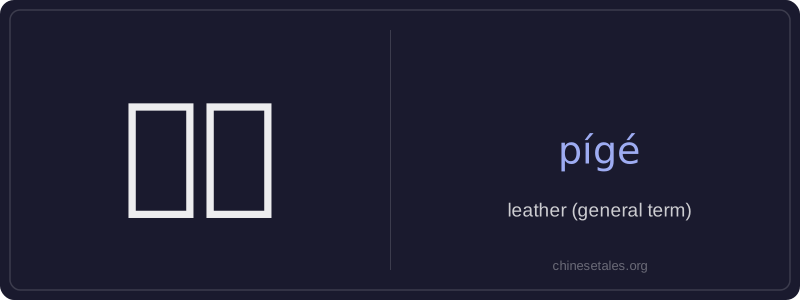
皮革 (pígé) is the standard Mandarin term for 'leather'—material made by tanning animal hides or skins. The character 皮 (pí) means 'skin' or 'hide', referring to the raw outer layer of animals; 革 (gé) originally meant 'tanned hide' and carries the sense of processed, durable material. Together, 皮革 emphasizes the finished product—not raw skin, but treated, flexible, and usable leather used in goods like shoes, bags, jackets, and furniture.
This word is neutral in register and widely used in both spoken and written Chinese. It applies to leather from any animal source (e.g., cow, sheep, goat), though specific types are named with modifiers (e.g., 牛皮 'cowhide', 羊皮 'sheepskin'). Unlike colloquial terms like 皮子 (pízi), 皮革 sounds formal and precise—common in product descriptions, manufacturing contexts, and official labeling.
Example Sentences
Related Words
国语
‘Guó yǔ’ literally means 'national language'—
无论谁
‘无论谁’ (wú lùn shéi) is a pronoun meaning
不对
不对 (bù duì) literally combines 不 (bù), meani
外语
‘外语’ literally means ‘outside language’ —
违规
违规 (wéi guī) literally means 'to violate rules
亲笔
‘亲笔’ literally means ‘one’s own hand’—comb
我的
我的 (wǒ de) is a possessive pronoun meaning 'my'
短袜
‘短袜’ (duǎn wà) literally means ‘short sock