Word Explanation
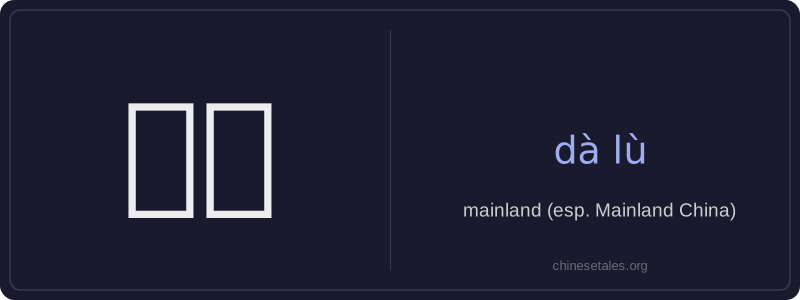
‘大陆’ (dà lù) literally means ‘big land’ — ‘大’ (dà) means ‘big’ or ‘great’, and ‘陆’ (lù) means ‘land’ or ‘continent’. Together, it refers to a large, continuous landmass, most commonly used to mean ‘the mainland’ — especially Mainland China, as distinguished from Taiwan, Hong Kong, and Macau. It carries political and geographical weight, often appearing in official, media, or formal contexts when discussing cross-strait relations, travel policies, or regional economics.
In broader usage, ‘大陆’ can also refer to any continent (e.g., 欧洲大陆 ‘European continent’), but in everyday Mandarin spoken in China or by Chinese speakers globally, it overwhelmingly implies Mainland China. It’s neutral in tone but context-sensitive: using it to refer to China is standard and respectful; misapplying it (e.g., calling Taiwan ‘大陆’) would be factually incorrect and potentially offensive.
Example Sentences
Related Words
国语
‘Guó yǔ’ literally means 'national language'—
无论谁
‘无论谁’ (wú lùn shéi) is a pronoun meaning
不对
不对 (bù duì) literally combines 不 (bù), meani
外语
‘外语’ literally means ‘outside language’ —
违规
违规 (wéi guī) literally means 'to violate rules
亲笔
‘亲笔’ literally means ‘one’s own hand’—comb
我的
我的 (wǒ de) is a possessive pronoun meaning 'my'
短袜
‘短袜’ (duǎn wà) literally means ‘short sock