Word Explanation
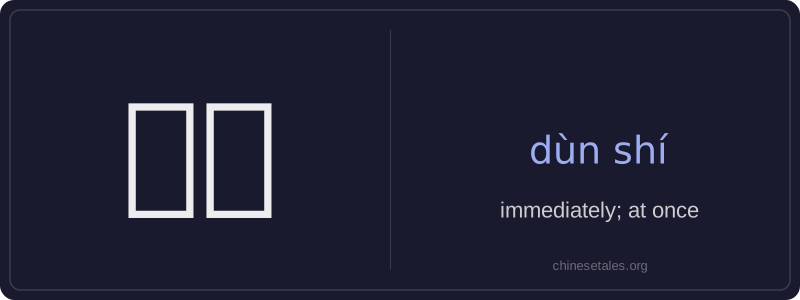
顿时 means 'immediately' or 'at once', emphasizing a sudden, instantaneous change or reaction. Literally, 顿 (dùn) conveys 'a pause' or 'a momentary stop', while 时 (shí) means 'time'; together, they evoke the idea of 'in that very instant'. It functions exclusively as an adverb and usually appears at the beginning of a clause or right before the verb it modifies.
This word is common in both written and spoken Chinese, especially in narratives, news reports, and descriptive writing where timing and immediacy matter. It often follows a trigger event — such as hearing surprising news, witnessing something unexpected, or experiencing a physical sensation — and signals how quickly a response (emotional, physical, or situational) unfolds. It carries a slightly literary or formal tone compared to colloquial alternatives like 马上 or 立刻, but remains widely understood and used in everyday contexts.
Example Sentences
Related Words
国语
‘Guó yǔ’ literally means 'national language'—
无论谁
‘无论谁’ (wú lùn shéi) is a pronoun meaning
不对
不对 (bù duì) literally combines 不 (bù), meani
外语
‘外语’ literally means ‘outside language’ —
违规
违规 (wéi guī) literally means 'to violate rules
亲笔
‘亲笔’ literally means ‘one’s own hand’—comb
我的
我的 (wǒ de) is a possessive pronoun meaning 'my'
短袜
‘短袜’ (duǎn wà) literally means ‘short sock