Word Explanation
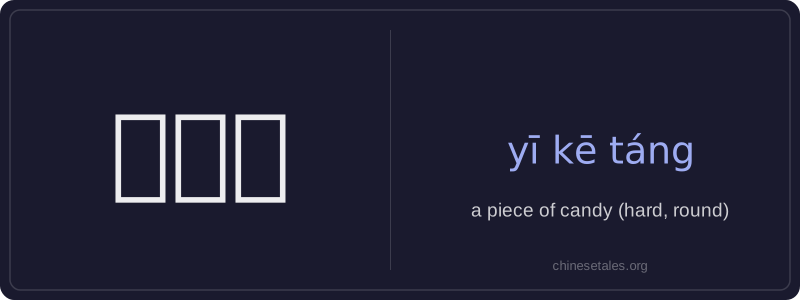
'Yī kē táng' literally means 'one grain/candied piece of sugar' and refers specifically to a single, small, hard, round candy—like a peppermint or butterscotch drop. The measure word 'kē' is used for small, solid, rounded objects (e.g., pills, beads, seeds), emphasizing shape and countability; it’s not used for chocolates, gummies, or candy bars. Unlike generic terms like 'yī kuài táng' (a piece of candy, often soft or square), 'yī kē táng' evokes a classic, nostalgic image—often associated with childhood rewards, medicine-taking incentives, or polite gift-giving in small quantities.
This phrase appears frequently in daily life: parents offering candy as encouragement, teachers giving sweets after class, or doctors using it to ease a child’s fear of medicine. It carries gentle, affectionate connotations and is rarely used in formal or technical contexts. Note that 'kē' is strictly tied to physical form—not sweetness level or flavor—so substituting another measure word changes meaning and naturalness.
Example Sentences
Related Words
国语
‘Guó yǔ’ literally means 'national language'—
无论谁
‘无论谁’ (wú lùn shéi) is a pronoun meaning
不对
不对 (bù duì) literally combines 不 (bù), meani
外语
‘外语’ literally means ‘outside language’ —
违规
违规 (wéi guī) literally means 'to violate rules
亲笔
‘亲笔’ literally means ‘one’s own hand’—comb
我的
我的 (wǒ de) is a possessive pronoun meaning 'my'
短袜
‘短袜’ (duǎn wà) literally means ‘short sock