Word Explanation
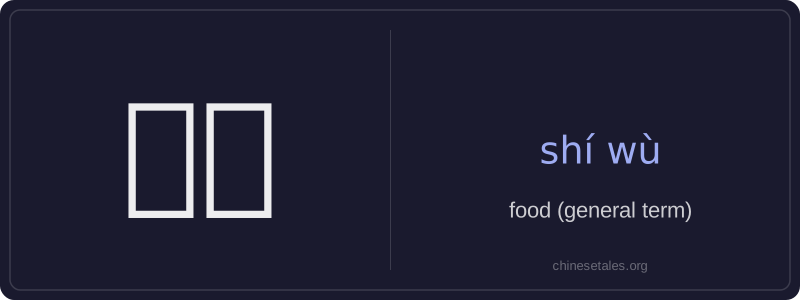
食物 (shí wù) is the standard, neutral noun for 'food' in Mandarin — a general term covering anything edible, whether raw or prepared, plant-based or animal-derived. The character 食 means 'to eat' or 'edible', and 物 means 'thing' or 'substance'; together, they literally mean 'edible thing'. Unlike more specific terms like 菜 (cài, 'dish') or 零食 (língshí, 'snack'), 食物 emphasizes nutritional or biological function rather than preparation method or cultural context.
This word appears frequently in health, science, safety, and daily life contexts — for example, on food packaging (食品 shípǐn, 'food product'), in nutrition education, or when discussing allergies and dietary restrictions. It’s formal enough for writing and speech alike, but rarely used in casual exclamations (e.g., you wouldn’t say '好吃的食物!' as enthusiastically as just '好吃!'). It’s also commonly paired with classifiers like 种 (zhǒng, 'kind') — e.g., 多种食物 (duō zhǒng shíwù, 'many kinds of food').
Example Sentences
Related Words
国语
‘Guó yǔ’ literally means 'national language'—
无论谁
‘无论谁’ (wú lùn shéi) is a pronoun meaning
不对
不对 (bù duì) literally combines 不 (bù), meani
外语
‘外语’ literally means ‘outside language’ —
违规
违规 (wéi guī) literally means 'to violate rules
亲笔
‘亲笔’ literally means ‘one’s own hand’—comb
我的
我的 (wǒ de) is a possessive pronoun meaning 'my'
短袜
‘短袜’ (duǎn wà) literally means ‘short sock