Word Explanation
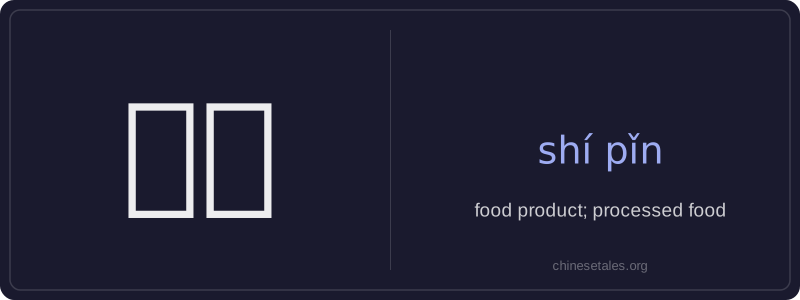
食品 (shí pǐn) literally combines 食 (shí), meaning 'to eat' or 'food', and 品 (pǐn), meaning 'item', 'product', or 'quality'. Together, they refer specifically to food products — especially those that are processed, packaged, or commercially prepared, as opposed to raw ingredients like vegetables or fresh meat. It’s a formal, neutral term commonly used in regulatory, retail, and health contexts.
This word appears frequently on labels, in supermarket sections (e.g., 进口食品 'imported food products'), government guidelines (e.g., 食品安全 'food safety'), and everyday discussions about nutrition or shopping. While it can technically include all edible items, native speakers typically reserve 食品 for manufactured or ready-to-consume goods — such as canned soup, yogurt, snacks, or frozen meals — distinguishing them from unprocessed staples like 米 (rice) or 苹果 (apple), which are usually called 食材 (shí cái, 'cooking ingredients') instead.
Example Sentences
Related Words
国语
‘Guó yǔ’ literally means 'national language'—
无论谁
‘无论谁’ (wú lùn shéi) is a pronoun meaning
不对
不对 (bù duì) literally combines 不 (bù), meani
外语
‘外语’ literally means ‘outside language’ —
违规
违规 (wéi guī) literally means 'to violate rules
亲笔
‘亲笔’ literally means ‘one’s own hand’—comb
我的
我的 (wǒ de) is a possessive pronoun meaning 'my'
短袜
‘短袜’ (duǎn wà) literally means ‘short sock