Word Explanation
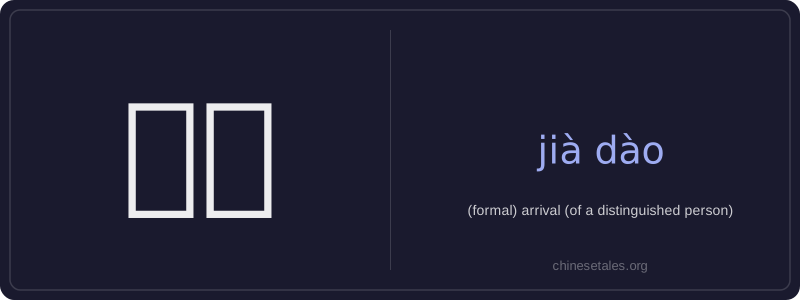
‘驾到’ is a highly formal and respectful expression used exclusively to announce or acknowledge the arrival of someone of high status—such as an emperor, senior official, dignitary, or revered elder. The character ‘驾’ originally referred to the imperial carriage or the emperor’s person (as in ‘御驾’, yù jià), carrying strong connotations of authority and prestige; ‘到’ simply means ‘to arrive’. Together, they form a compound noun meaning ‘(the) distinguished arrival’, not a verb phrase—so it functions as a noun, often preceded by ‘您的’ (your) or ‘贵’ (honorable), and rarely used in everyday speech.
This term appears mainly in historical dramas, ceremonial announcements, classical literature, or mock-formal contexts (e.g., playfully welcoming a guest). It evokes traditional Chinese hierarchical etiquette and is never used for ordinary people or casual situations. Because of its archaic and honorific weight, modern speakers avoid it outside stylized or ironic usage—misusing it can sound unintentionally pompous or comically out of place.
Example Sentences
Related Words
国语
‘Guó yǔ’ literally means 'national language'—
无论谁
‘无论谁’ (wú lùn shéi) is a pronoun meaning
不对
不对 (bù duì) literally combines 不 (bù), meani
外语
‘外语’ literally means ‘outside language’ —
违规
违规 (wéi guī) literally means 'to violate rules
亲笔
‘亲笔’ literally means ‘one’s own hand’—comb
我的
我的 (wǒ de) is a possessive pronoun meaning 'my'
认同
‘认同’ (tóng rèn) is a verb meaning ‘to ident