Word Explanation
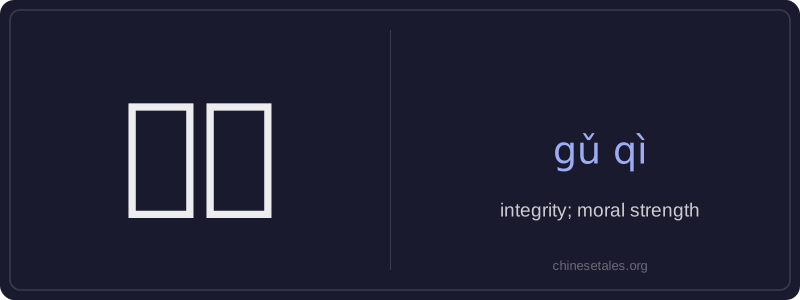
‘骨气’ (gǔ qì) literally combines ‘bone’ (骨) and ‘qi’ or vital energy (气), evoking the image of unyielding skeletal strength — a metaphor for inner moral fortitude and personal integrity. It describes the courage to uphold one’s principles, resist pressure or temptation, and act with dignity even in hardship. Unlike abstract terms like ‘morality’, 骨气 carries emotional weight and implies active, visible steadfastness — such as refusing bribes, speaking truth to power, or enduring poverty without compromising values.
This word is deeply rooted in Confucian and traditional Chinese ethics, where character is judged by how one behaves under adversity. It’s often used to praise people who remain principled despite social, economic, or political pressure. While it can describe individuals, it’s also applied collectively — e.g., ‘民族的骨气’ (a nation’s moral backbone). It’s not about stubbornness or pridefulness, but about grounded, ethical resilience that earns respect.
Example Sentences
Related Words
国语
‘Guó yǔ’ literally means 'national language'—
无论谁
‘无论谁’ (wú lùn shéi) is a pronoun meaning
不对
不对 (bù duì) literally combines 不 (bù), meani
外语
‘外语’ literally means ‘outside language’ —
违规
违规 (wéi guī) literally means 'to violate rules
亲笔
‘亲笔’ literally means ‘one’s own hand’—comb
我的
我的 (wǒ de) is a possessive pronoun meaning 'my'
认同
‘认同’ (tóng rèn) is a verb meaning ‘to ident