Word Explanation
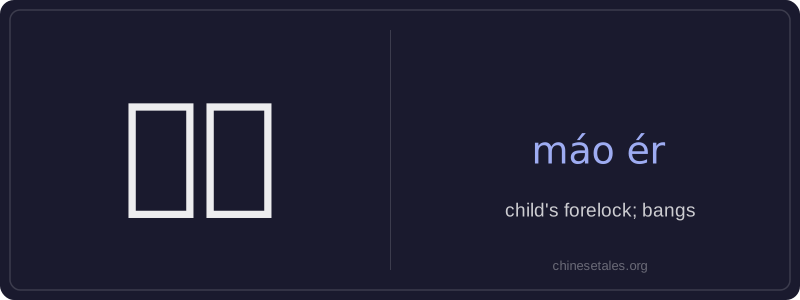
‘髦兒’ (máo ér) refers specifically to the strip of hair growing naturally across a child’s forehead — commonly called ‘bangs’ or a ‘forelock’ in English. Though the character 髦 originally meant ‘fine, long hair on animals’ (especially horses), it evolved in classical Chinese to denote the youthful, uncut hair worn by boys before adulthood; the suffix 兒 adds a diminutive, affectionate nuance, reinforcing its association with childhood and innocence.
This term is now literary or poetic rather than colloquial: modern Mandarin speakers usually say 刘海儿 (liú hǎi ér) for ‘bangs’. 髦兒 appears mainly in historical texts, poetry, or nostalgic descriptions of traditional childhood appearance — for example, in phrases like ‘垂髫’ (chuí tiáo, children with hanging topknots) or when evoking Confucian ideals of youthful virtue. It carries gentle, warm connotations of purity, simplicity, and early life stages.
Example Sentences
Related Words
国语
‘Guó yǔ’ literally means 'national language'—
无论谁
‘无论谁’ (wú lùn shéi) is a pronoun meaning
不对
不对 (bù duì) literally combines 不 (bù), meani
外语
‘外语’ literally means ‘outside language’ —
违规
违规 (wéi guī) literally means 'to violate rules
亲笔
‘亲笔’ literally means ‘one’s own hand’—comb
我的
我的 (wǒ de) is a possessive pronoun meaning 'my'
认同
‘认同’ (tóng rèn) is a verb meaning ‘to ident