Word Explanation
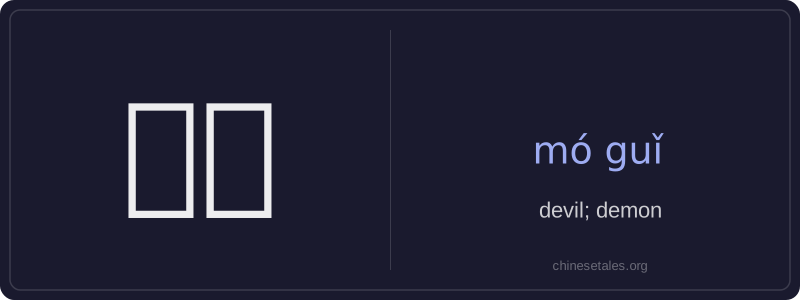
‘魔鬼’ literally combines 魔 (mó), meaning ‘demon’ or ‘supernatural being with magical powers’, and 鬼 (guǐ), meaning ‘ghost’ or ‘spirit’. Together, they form a compound noun meaning ‘devil’ or ‘demon’—a malevolent, often supernatural entity associated with evil, temptation, or chaos. Unlike the more neutral 鬼 (which can refer to any spirit, including ancestral ones), 魔 carries strong connotations of deception, corruption, and active malice.
In modern Chinese, ‘魔鬼’ is used both literally in religious or mythological contexts (e.g., Christian or Buddhist cosmology) and figuratively to describe people or things perceived as extremely cruel, ruthless, or dangerously alluring—such as ‘魔鬼教练’ (a brutally strict coach) or ‘魔鬼身材’ (a stunning, almost unreal body). It appears frequently in literature, film, and everyday metaphors, but rarely in formal or academic writing unless discussing folklore or theology.
Example Sentences
Related Words
国语
‘Guó yǔ’ literally means 'national language'—
无论谁
‘无论谁’ (wú lùn shéi) is a pronoun meaning
不对
不对 (bù duì) literally combines 不 (bù), meani
外语
‘外语’ literally means ‘outside language’ —
违规
违规 (wéi guī) literally means 'to violate rules
亲笔
‘亲笔’ literally means ‘one’s own hand’—comb
我的
我的 (wǒ de) is a possessive pronoun meaning 'my'
认同
‘认同’ (tóng rèn) is a verb meaning ‘to ident