Word Explanation
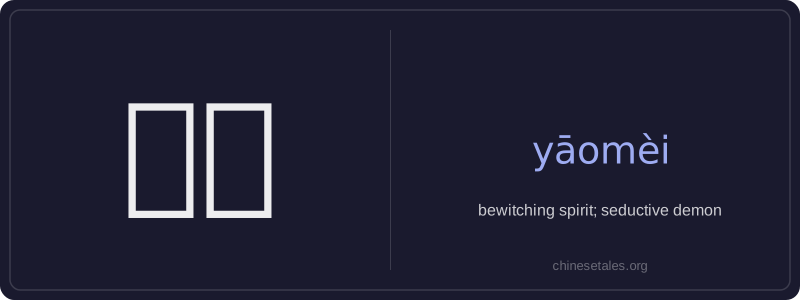
妖魅 (yāomèi) is a classical Chinese compound noun referring to a supernatural, often alluring and dangerous spirit—typically female—that uses charm or illusion to bewitch or harm humans. The first character 妖 (yāo) conveys strangeness, abnormality, or uncanny power, frequently associated with shape-shifting or unnatural origins; the second character 魅 (mèi) means 'spirit' or 'ghost' that entices or fascinates, especially through seduction or mystery. Together, they evoke a being that is both spiritually potent and dangerously attractive.
This term appears predominantly in classical literature, folklore, and modern fantasy genres—not in everyday speech. It carries strong literary and mythological weight, implying moral ambiguity: while visually captivating, 妖魅 are usually morally corrupt or predatory. Unlike neutral terms like 精灵 (jīnglíng, 'elf'), 妖魅 suggests menace masked by beauty, reflecting traditional Daoist and folk beliefs about spiritual corruption and temptation.
Example Sentences
Related Words
国语
‘Guó yǔ’ literally means 'national language'—
无论谁
‘无论谁’ (wú lùn shéi) is a pronoun meaning
不对
不对 (bù duì) literally combines 不 (bù), meani
外语
‘外语’ literally means ‘outside language’ —
违规
违规 (wéi guī) literally means 'to violate rules
亲笔
‘亲笔’ literally means ‘one’s own hand’—comb
我的
我的 (wǒ de) is a possessive pronoun meaning 'my'
认同
‘认同’ (tóng rèn) is a verb meaning ‘to ident