Word Explanation
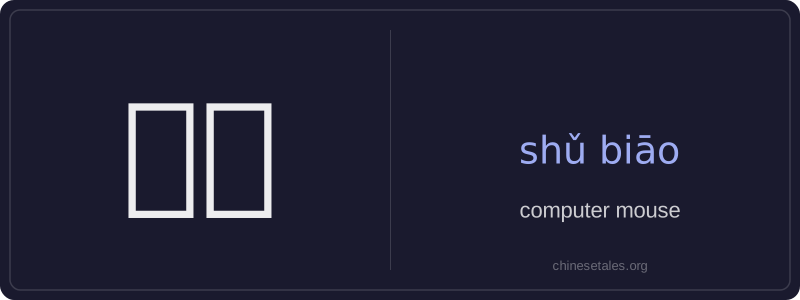
鼠标 (shǔ biāo) literally means 'rat marker' or 'mouse indicator'—a vivid example of how Chinese often creates tech terms by combining familiar, concrete words. The character 鼠 (shǔ) means 'rat' or 'mouse', referring to the small rodent, while 标 (biāo) means 'marker', 'indicator', or 'target'. Together, they form a compound noun that refers specifically to the hand-held input device used to control a cursor on a computer screen. Though the device bears no biological resemblance to a rodent, its original shape—with a cord resembling a tail—and early marketing in English ('mouse') inspired this direct translation.
This word is universally understood across Mandarin-speaking regions and appears in everyday computing contexts: software instructions, tech support, and classroom settings. It’s a neutral, standard term—not slang or formal—and is used identically in mainland China, Taiwan, and overseas communities. Unlike some tech terms borrowed from English (e.g., 'email'), 鼠标 is a fully sinicized native compound, reflecting how Chinese adapts foreign concepts through semantic transparency rather than phonetic borrowing.
Example Sentences
Related Words
国语
‘Guó yǔ’ literally means 'national language'—
无论谁
‘无论谁’ (wú lùn shéi) is a pronoun meaning
不对
不对 (bù duì) literally combines 不 (bù), meani
外语
‘外语’ literally means ‘outside language’ —
违规
违规 (wéi guī) literally means 'to violate rules
亲笔
‘亲笔’ literally means ‘one’s own hand’—comb
我的
我的 (wǒ de) is a possessive pronoun meaning 'my'
认同
‘认同’ (tóng rèn) is a verb meaning ‘to ident