Word Explanation
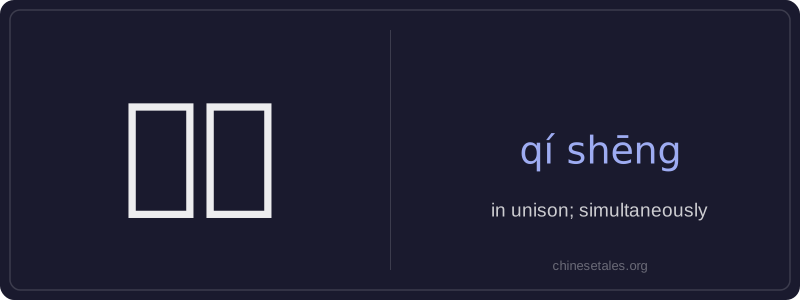
齐声 (qí shēng) literally combines 齐 (qí), meaning 'together' or 'in unison', and 声 (shēng), meaning 'voice' or 'sound'. Together, it describes the act of multiple people speaking, singing, or shouting at the exact same time — with coordination and unity. It emphasizes collective vocal action rather than mere simultaneity; the emphasis is on harmony and shared intention.
This term is commonly used in contexts like classrooms, rallies, ceremonies, sports events, or choir rehearsals — anywhere group vocal participation occurs intentionally. While it can occasionally describe non-human sounds (e.g., birds chirping together), its primary usage centers on human group behavior. It functions as an adverb modifying verbs like 喊 (shout), 唱 (sing), or 说 (say), and rarely appears as a noun or adjective. It carries a neutral-to-positive connotation, suggesting order, enthusiasm, or solidarity.
Example Sentences
Related Words
国语
‘Guó yǔ’ literally means 'national language'—
无论谁
‘无论谁’ (wú lùn shéi) is a pronoun meaning
不对
不对 (bù duì) literally combines 不 (bù), meani
外语
‘外语’ literally means ‘outside language’ —
违规
违规 (wéi guī) literally means 'to violate rules
亲笔
‘亲笔’ literally means ‘one’s own hand’—comb
我的
我的 (wǒ de) is a possessive pronoun meaning 'my'
认同
‘认同’ (tóng rèn) is a verb meaning ‘to ident