Word Explanation
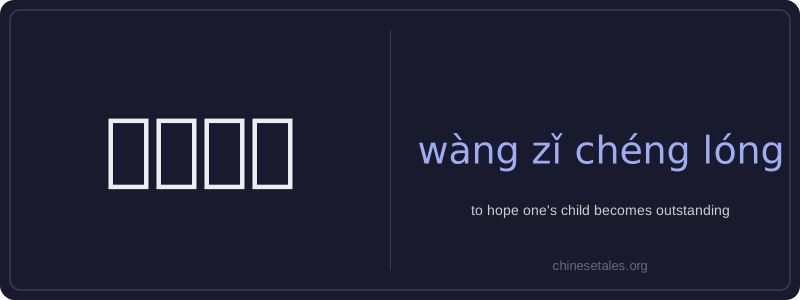
‘望子成龙’ literally means ‘to hope that one’s child becomes a dragon.’ In Chinese culture, the dragon symbolizes exceptional talent, power, success, and nobility—never danger or evil as in some Western traditions. The phrase expresses a deep, often intense parental aspiration for their child to achieve outstanding accomplishments, especially academically or professionally.
This idiom is commonly used in discussions about education, parenting pressures, and societal expectations. Though positive in intent, it can carry subtle criticism when describing overly ambitious or unrealistic parental attitudes. It functions syntactically as a noun or noun phrase—often the subject or object of a sentence—and appears in both spoken and written contexts, especially in media commentary on family life or education policy.
Example Sentences
Related Words
国语
‘Guó yǔ’ literally means 'national language'—
无论谁
‘无论谁’ (wú lùn shéi) is a pronoun meaning
不对
不对 (bù duì) literally combines 不 (bù), meani
外语
‘外语’ literally means ‘outside language’ —
违规
违规 (wéi guī) literally means 'to violate rules
亲笔
‘亲笔’ literally means ‘one’s own hand’—comb
我的
我的 (wǒ de) is a possessive pronoun meaning 'my'
认同
‘认同’ (tóng rèn) is a verb meaning ‘to ident