Word Explanation
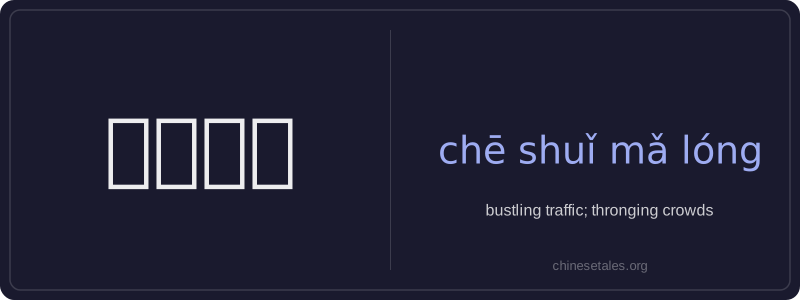
‘车水马龙’ is a vivid, classical Chinese idiom describing a scene of intense urban activity—literally 'cars like flowing water, horses like coiling dragons.' Though it mentions vehicles and animals, it’s not about transportation or zoology; rather, it evokes the ceaseless, dense movement of people and traffic in a busy city center. The imagery draws from ancient times when carriages and horse-drawn carts filled streets, but today it’s used metaphorically for modern bustling avenues, commercial districts, or festival crowds.
This four-character idiom functions as a noun or noun phrase and often appears in descriptive writing, news reports, or spoken commentary to emphasize energy, prosperity, or overwhelming busyness. It carries a neutral-to-positive connotation—suggesting vitality and dynamism—but can occasionally imply stress or chaos depending on context. It’s commonly modified by adjectives like ‘繁华的’ (prosperous) or ‘喧闹的’ (noisy), and frequently appears after verbs like ‘看到’ (to see), ‘穿过’ (to pass through), or ‘呈现’ (to present).
Example Sentences
Related Words
国语
‘Guó yǔ’ literally means 'national language'—
无论谁
‘无论谁’ (wú lùn shéi) is a pronoun meaning
不对
不对 (bù duì) literally combines 不 (bù), meani
外语
‘外语’ literally means ‘outside language’ —
违规
违规 (wéi guī) literally means 'to violate rules
亲笔
‘亲笔’ literally means ‘one’s own hand’—comb
我的
我的 (wǒ de) is a possessive pronoun meaning 'my'
认同
‘认同’ (tóng rèn) is a verb meaning ‘to ident