Word Explanation
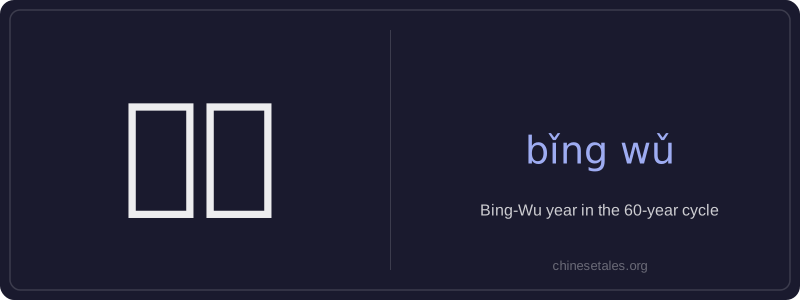
‘丙午’ (bǐng wǔ) is a specific year designation in the traditional Chinese 60-year sexagenary cycle, formed by combining the third of the Ten Heavenly Stems (丙, bǐng) and the seventh of the Twelve Earthly Branches (午, wǔ). The Stem-Branch system pairs each Stem with each Branch in sequence, generating 60 unique combinations that repeat cyclically. ‘丙午’ corresponds to years such as 1906, 1966, and 2026 — all years when the lunar calendar’s stem-branch designation matches this pairing.
This term appears primarily in historical, astrological, or cultural contexts — for example, in dating old documents, discussing zodiacal influences, or commemorating anniversaries tied to the cycle. While ‘午’ alone refers to the Horse in the Chinese zodiac, ‘丙午’ does not mean ‘Fire Horse’ in everyday speech; rather, it functions as a formal chronological label. Learners should treat it as a fixed compound noun, not a descriptive phrase, and avoid parsing it literally outside scholarly or calendrical discussion.
Example Sentences
Related Words
国语
‘Guó yǔ’ literally means 'national language'—
无论谁
‘无论谁’ (wú lùn shéi) is a pronoun meaning
不对
不对 (bù duì) literally combines 不 (bù), meani
外语
‘外语’ literally means ‘outside language’ —
违规
违规 (wéi guī) literally means 'to violate rules
亲笔
‘亲笔’ literally means ‘one’s own hand’—comb
我的
我的 (wǒ de) is a possessive pronoun meaning 'my'
面条
‘面条’ (miàn tiáo) literally means ‘flour str