Word Explanation
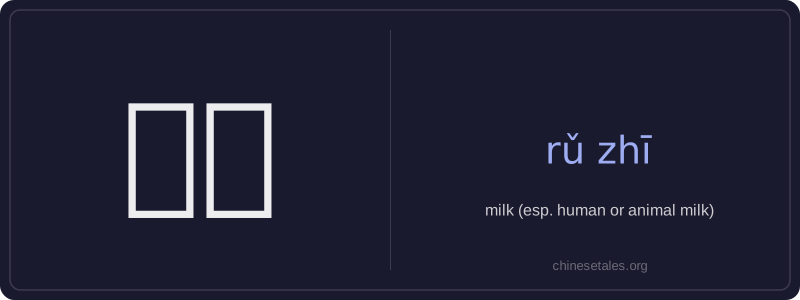
‘乳汁’ literally combines 乳 (rǔ), meaning 'milk' or 'breast', and 汁 (zhī), meaning 'juice' or 'liquid extract'. Together, they refer specifically to milk produced by mammals—especially human breast milk or milk from animals like cows, goats, or dogs. Unlike the more general term 牛奶 (niú nǎi, 'cow’s milk') or 母乳 (mǔ rǔ, 'mother’s milk'), 乳汁 emphasizes the biological, nourishing fluid secreted by mammary glands, often in scientific, medical, or zoological contexts.
This word carries a neutral-to-formal register and is rarely used in casual daily speech—people usually say 奶 (nǎi) or specify the source (e.g., 羊奶 yáng nǎi). It appears frequently in biology textbooks, pediatric health discussions, veterinary care, and breastfeeding guidance. While it can technically refer to any mammal’s milk, it most commonly evokes human lactation or animal nursing behavior in academic or caregiving settings.
Example Sentences
Related Words
国语
‘Guó yǔ’ literally means 'national language'—
无论谁
‘无论谁’ (wú lùn shéi) is a pronoun meaning
不对
不对 (bù duì) literally combines 不 (bù), meani
外语
‘外语’ literally means ‘outside language’ —
违规
违规 (wéi guī) literally means 'to violate rules
亲笔
‘亲笔’ literally means ‘one’s own hand’—comb
我的
我的 (wǒ de) is a possessive pronoun meaning 'my'
面条
‘面条’ (miàn tiáo) literally means ‘flour str