Word Explanation
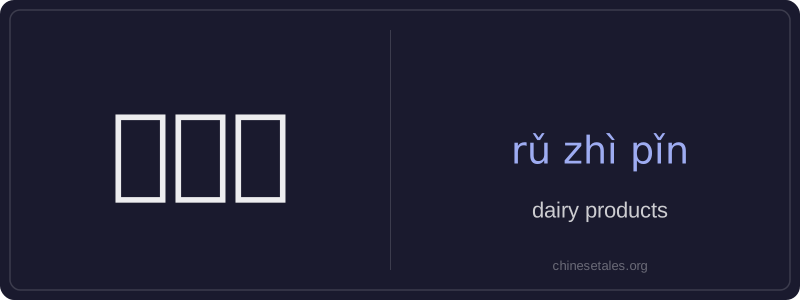
乳制品 literally means 'milk-made products' — 乳 (rǔ) means 'milk', 制 (zhì) means 'to make or process', and 品 (pǐn) means 'product' or 'item'. Together, the term refers collectively to foods derived from animal milk, especially cow’s, goat’s, or sheep’s milk. Common examples include milk, yogurt, cheese, butter, cream, and ice cream.
This word is widely used in food labeling, supermarket sections, nutrition discussions, and health guidelines in Chinese-speaking contexts. It carries a neutral, formal register and appears frequently in written materials like packaging, menus, dietary advice, and government food safety announcements. Unlike colloquial terms such as 牛奶 (niú nǎi, 'cow’s milk') or 奶酪 (nǎi lào, 'cheese'), 乳制品 functions as an umbrella category — it emphasizes origin (milk) and processing, not specific form or flavor.
Example Sentences
Related Words
国语
‘Guó yǔ’ literally means 'national language'—
无论谁
‘无论谁’ (wú lùn shéi) is a pronoun meaning
外语
‘外语’ literally means ‘outside language’ —
不对
不对 (bù duì) literally combines 不 (bù), meani
违规
违规 (wéi guī) literally means 'to violate rules
亲笔
‘亲笔’ literally means ‘one’s own hand’—comb
我的
我的 (wǒ de) is a possessive pronoun meaning 'my'
面条
‘面条’ (miàn tiáo) literally means ‘flour str