Word Explanation
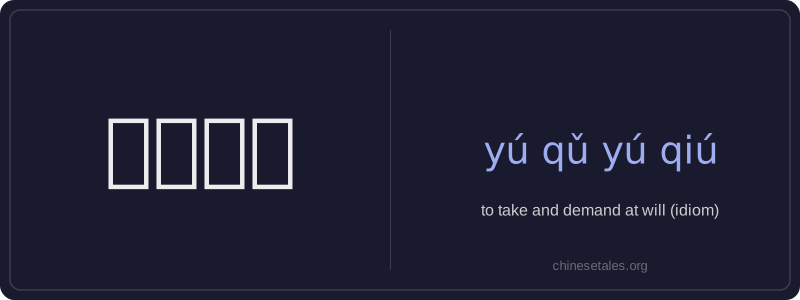
‘予取予求’ is a classical four-character idiom meaning 'to take and demand at will'—implying absolute, unchecked control or privilege, often with a negative connotation of arrogance or exploitation. Literally, the two ‘予’ (yú) mean 'I' or 'to give', but here they function as emphatic prefixes meaning 'as I wish'; ‘取’ (qǔ) means 'to take', and ‘求’ (qiú) means 'to ask for' or 'to demand'. Together, the phrase evokes a sense of unbridled entitlement, like a ruler or dominant force acting without restraint or accountability.
This idiom originates from ancient texts describing tyrannical rule or predatory behavior—historically applied to oppressive officials, invading armies, or exploitative powers. Today it’s used mainly in formal writing, political commentary, or literary criticism to condemn abuses of power, whether by corporations, governments, or individuals. It carries strong moral judgment and is rarely used neutrally or positively.
Example Sentences
Related Words
国语
‘Guó yǔ’ literally means 'national language'—
无论谁
‘无论谁’ (wú lùn shéi) is a pronoun meaning
外语
‘外语’ literally means ‘outside language’ —
不对
不对 (bù duì) literally combines 不 (bù), meani
违规
违规 (wéi guī) literally means 'to violate rules
亲笔
‘亲笔’ literally means ‘one’s own hand’—comb
我的
我的 (wǒ de) is a possessive pronoun meaning 'my'
面条
‘面条’ (miàn tiáo) literally means ‘flour str