Word Explanation
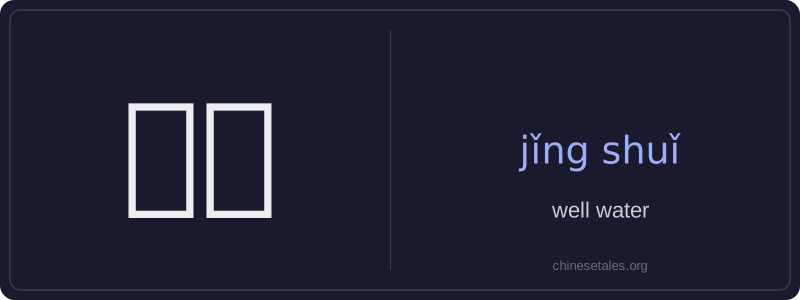
'Jǐng shuǐ' literally combines 'jǐng' (well) and 'shuǐ' (water) to mean water drawn from a traditional dug or drilled well. Unlike tap water or bottled water, well water is groundwater accessed through a vertical shaft, often associated with rural or historical settings in China. It’s valued for its perceived natural purity and coolness, especially in summer, though modern usage also acknowledges potential contamination risks without proper testing.
This term evokes cultural imagery—such as village life, ancestral homes, or classical poetry—where well water symbolizes simplicity, self-sufficiency, or connection to the land. While less common in urban daily life today, it still appears in idioms (e.g., 井水不犯河水), literature, and discussions about local resources or environmental conservation. The word carries neutral-to-positive connotations depending on context, rarely used in technical hydrology but frequent in descriptive, nostalgic, or regional speech.
Example Sentences
Related Words
国语
‘Guó yǔ’ literally means 'national language'—
无论谁
‘无论谁’ (wú lùn shéi) is a pronoun meaning
外语
‘外语’ literally means ‘outside language’ —
不对
不对 (bù duì) literally combines 不 (bù), meani
违规
违规 (wéi guī) literally means 'to violate rules
亲笔
‘亲笔’ literally means ‘one’s own hand’—comb
我的
我的 (wǒ de) is a possessive pronoun meaning 'my'
面条
‘面条’ (miàn tiáo) literally means ‘flour str