Word Explanation
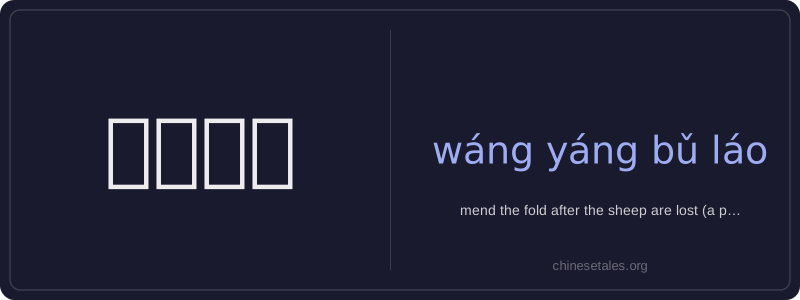
'Wáng yáng bǔ láo' is a classical Chinese idiom literally meaning 'lose sheep, then repair the pen.' It originates from an ancient fable in which a shepherd neglects his fence, loses sheep to wolves, and only after the loss fixes the enclosure. Though the damage has already occurred, the act of mending prevents further loss — conveying the idea that it’s never too late to correct a mistake or address a problem, even after consequences have begun.
The four characters combine meaningfully: 亡 (wáng) means 'to lose' or 'perish'; 羊 (yáng) means 'sheep'; 补 (bǔ) means 'to mend' or 'to repair'; and 牢 (láo) means 'pen,' 'enclosure,' or 'stable.' As a noun phrase, it functions as a set idiom — not used verbally or adjectivally — and appears most often in reflective, advisory, or didactic contexts, such as giving advice, analyzing policy failures, or encouraging timely remediation.
Example Sentences
Related Words
国语
‘Guó yǔ’ literally means 'national language'—
无论谁
‘无论谁’ (wú lùn shéi) is a pronoun meaning
外语
‘外语’ literally means ‘outside language’ —
不对
不对 (bù duì) literally combines 不 (bù), meani
违规
违规 (wéi guī) literally means 'to violate rules
亲笔
‘亲笔’ literally means ‘one’s own hand’—comb
我的
我的 (wǒ de) is a possessive pronoun meaning 'my'
面条
‘面条’ (miàn tiáo) literally means ‘flour str