Word Explanation
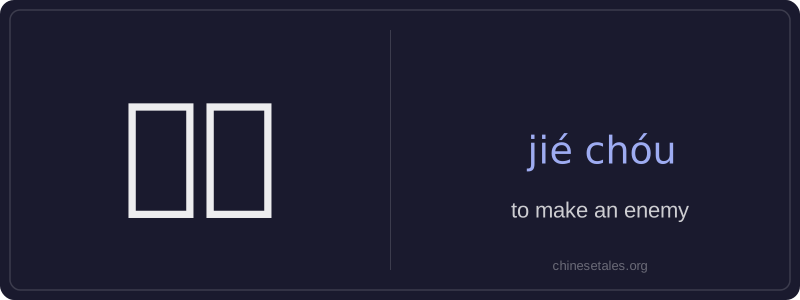
'Jié chóu' literally combines 'jié' (to form, to establish) and 'chóu' (enemy, grudge), meaning 'to make an enemy' or 'to incur enmity'. It describes the act of provoking hostility or creating lasting ill will—often through conflict, betrayal, insult, or injustice. Unlike casual disagreement, jié chóu implies a serious, often irreversible rupture in a relationship.
This verb is commonly used in historical narratives, moral discussions, and cautionary contexts—e.g., warning against rash actions that might 'jié chóu' with others. It appears frequently in idioms like '结仇招恨' (to make enemies and invite hatred) and carries a slightly formal or literary tone. While it can be used transitively ('jié chóu with someone'), it’s often used without an explicit object when the context makes the target clear.
Example Sentences
Related Words
国语
‘Guó yǔ’ literally means 'national language'—
无论谁
‘无论谁’ (wú lùn shéi) is a pronoun meaning
外语
‘外语’ literally means ‘outside language’ —
不对
不对 (bù duì) literally combines 不 (bù), meani
违规
违规 (wéi guī) literally means 'to violate rules
亲笔
‘亲笔’ literally means ‘one’s own hand’—comb
我的
我的 (wǒ de) is a possessive pronoun meaning 'my'
面条
‘面条’ (miàn tiáo) literally means ‘flour str