Word Explanation
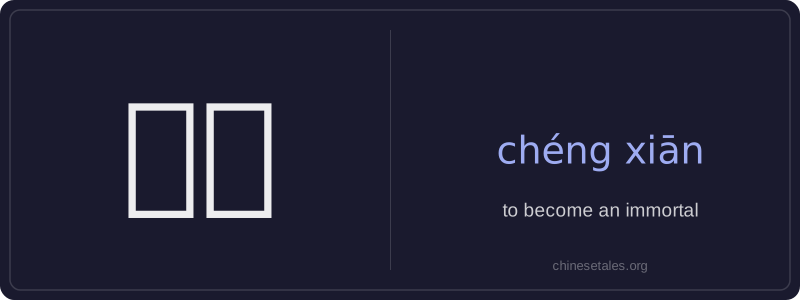
'Chéng xiān' literally means 'to become an immortal' — a core concept in Daoist mythology and classical Chinese literature. The verb 成 (chéng) means 'to become' or 'to accomplish', while 仙 (xiān) refers to a transcendent being — an immortal sage who has achieved eternal life, supernatural powers, and harmony with the Dao, often through cultivation, alchemy, or moral perfection. Unlike gods or deities, xian are typically human beings who transformed themselves through rigorous practice.
This term appears frequently in legends, novels like 'Journey to the West', and poetic allusions. It carries strong cultural and philosophical weight, evoking ideals of longevity, spiritual freedom, and liberation from mortality. While rarely used in modern daily speech, it survives in idioms, literary expressions, and figurative language — for instance, describing someone who seems otherworldly calm or mysteriously skilled. It is not associated with religious practice today but remains a vivid metaphor for extraordinary personal transformation.
Example Sentences
Related Words
国语
‘Guó yǔ’ literally means 'national language'—
无论谁
‘无论谁’ (wú lùn shéi) is a pronoun meaning
外语
‘外语’ literally means ‘outside language’ —
不对
不对 (bù duì) literally combines 不 (bù), meani
违规
违规 (wéi guī) literally means 'to violate rules
亲笔
‘亲笔’ literally means ‘one’s own hand’—comb
我的
我的 (wǒ de) is a possessive pronoun meaning 'my'
面条
‘面条’ (miàn tiáo) literally means ‘flour str