Word Explanation
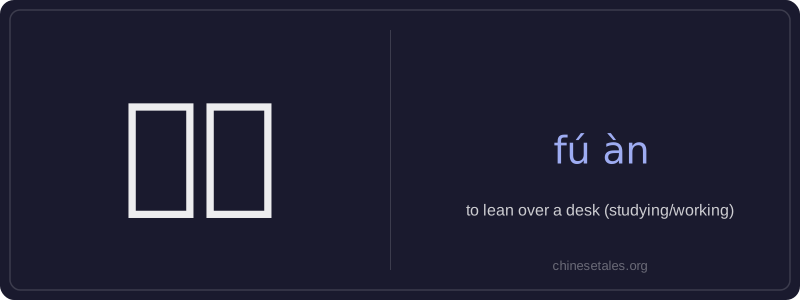
‘伏案’ literally means ‘to bow down over a desk’ — 伏 (fú) means ‘to bow, crouch, or lean forward’, and 案 (àn) refers to a traditional low writing desk or work surface. Together, the term evokes a focused, studious posture: head lowered, elbows on the desk, fully absorbed in reading, writing, or working. It’s a literary and slightly formal expression, commonly used in written Chinese and formal speech to describe diligent, concentrated desk work.
The phrase carries a positive connotation of dedication and seriousness — often implying long hours, quiet intensity, and intellectual effort. While it can describe any desk-based activity, it’s especially associated with academic study, scholarly research, creative writing, or meticulous office tasks. Unlike neutral terms like ‘working at a desk’, 伏案 suggests both physical posture and mental engagement, and is rarely used for casual or distracted desk activities like scrolling on a phone.
Example Sentences
Related Words
国语
‘Guó yǔ’ literally means 'national language'—
无论谁
‘无论谁’ (wú lùn shéi) is a pronoun meaning
外语
‘外语’ literally means ‘outside language’ —
不对
不对 (bù duì) literally combines 不 (bù), meani
违规
违规 (wéi guī) literally means 'to violate rules
亲笔
‘亲笔’ literally means ‘one’s own hand’—comb
我的
我的 (wǒ de) is a possessive pronoun meaning 'my'
面条
‘面条’ (miàn tiáo) literally means ‘flour str