Word Explanation
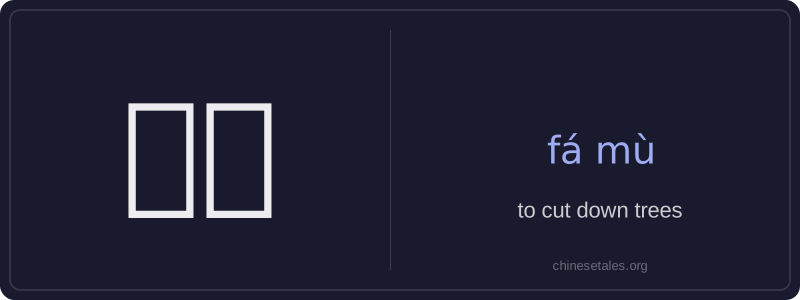
伐木 literally combines 伐 (fá), meaning 'to attack' or 'to cut down'—often used in formal or literary contexts—and 木 (mù), meaning 'tree' or 'wood'. Together, 伐木 means 'to cut down trees', typically referring to logging or timber harvesting. It is a formal, somewhat literary verb and is rarely used in casual speech; native speakers more commonly say 砍树 (kǎn shù) in everyday situations.
The term appears frequently in environmental discussions, forestry reports, and policy documents, especially when describing large-scale tree removal. It carries neutral or slightly negative connotations depending on context—e.g., sustainable 伐木 versus illegal or destructive 伐木. As a compound verb, it functions as a single unit and takes standard aspect particles like 了 (le) or 过 (guò) directly after the whole word (e.g., 伐木了, 伐过木).
Example Sentences
Related Words
国语
‘Guó yǔ’ literally means 'national language'—
无论谁
‘无论谁’ (wú lùn shéi) is a pronoun meaning
外语
‘外语’ literally means ‘outside language’ —
不对
不对 (bù duì) literally combines 不 (bù), meani
违规
违规 (wéi guī) literally means 'to violate rules
亲笔
‘亲笔’ literally means ‘one’s own hand’—comb
我的
我的 (wǒ de) is a possessive pronoun meaning 'my'
面条
‘面条’ (miàn tiáo) literally means ‘flour str