Word Explanation
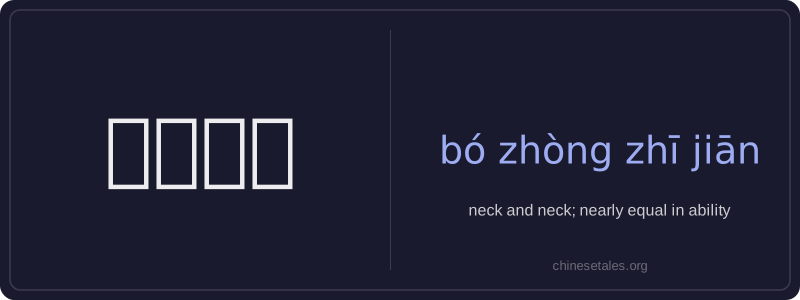
‘伯仲之间’ literally refers to the relationship between the first (伯) and second (仲) sons in traditional Chinese family hierarchy—two siblings ranked consecutively, implying near-identical status or ability. Over time, it evolved into an idiom meaning ‘neck and neck’ or ‘nearly equal in skill, quality, or performance,’ especially when comparing two people or things that are extremely close in merit with no clear winner.
The phrase is formal and literary, commonly used in written Chinese—such as news reports, commentaries, academic writing, or competitive contexts like sports, exams, or talent evaluations. It carries a tone of respectful acknowledgment of parity rather than rivalry. While the characters 伯 and 仲 originally denote birth order (like ‘eldest’ and ‘second eldest’), their combined use here is purely idiomatic; the phrase is never used to describe actual siblings or family roles in modern usage.
Example Sentences
Related Words
国语
‘Guó yǔ’ literally means 'national language'—
无论谁
‘无论谁’ (wú lùn shéi) is a pronoun meaning
外语
‘外语’ literally means ‘outside language’ —
不对
不对 (bù duì) literally combines 不 (bù), meani
违规
违规 (wéi guī) literally means 'to violate rules
亲笔
‘亲笔’ literally means ‘one’s own hand’—comb
我的
我的 (wǒ de) is a possessive pronoun meaning 'my'
面条
‘面条’ (miàn tiáo) literally means ‘flour str