Word Explanation
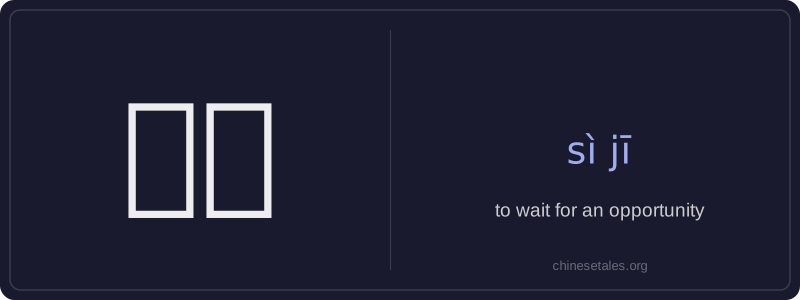
‘伺机’ is a verb meaning 'to wait for (and seize) an opportunity' — often with intention, patience, or strategic awareness. The first character 伺 (sì) means 'to watch closely' or 'to lie in wait', while 机 (jī) means 'opportunity' or 'a favorable moment'. Together, they convey the idea of observing carefully and acting decisively when conditions are right. It carries a slightly formal or literary tone and is commonly used in contexts involving planning, negotiation, competition, or self-improvement.
The word implies active vigilance rather than passive waiting: one doesn’t just hope for luck but watches for openings — like a strategist, athlete, or job seeker scanning for the right moment to act. It’s frequently found in written Chinese (news, essays, business reports) and formal speech, though it also appears in everyday conversation when describing deliberate, opportunistic behavior. Unlike casual phrases like 找机会 (to look for an opportunity), 伺机 suggests greater focus, timing, and purpose.
Example Sentences
Related Words
国语
‘Guó yǔ’ literally means 'national language'—
无论谁
‘无论谁’ (wú lùn shéi) is a pronoun meaning
外语
‘外语’ literally means ‘outside language’ —
不对
不对 (bù duì) literally combines 不 (bù), meani
违规
违规 (wéi guī) literally means 'to violate rules
亲笔
‘亲笔’ literally means ‘one’s own hand’—comb
我的
我的 (wǒ de) is a possessive pronoun meaning 'my'
面条
‘面条’ (miàn tiáo) literally means ‘flour str