Word Explanation
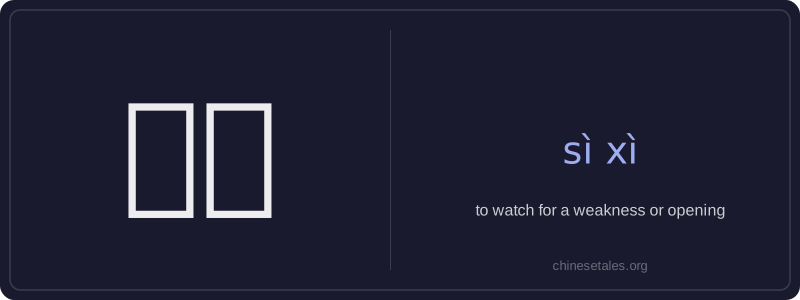
‘伺隙’ is a literary, slightly formal verb meaning 'to watch for (and exploit) a weakness, opening, or moment of vulnerability.' The first character 伺 (sì) means 'to wait for' or 'to watch closely,' often with intent; the second character 隙 (xì) means 'crack,' 'gap,' or 'opportunity'—literally a physical or metaphorical opening. Together, they form an idiom-like compound emphasizing patient, strategic observation before action.
This term appears frequently in classical and modern Chinese texts describing animal behavior (e.g., predators stalking prey), military strategy, or competitive human situations like business or debate. It carries a connotation of stealth, timing, and opportunism—not mere chance, but deliberate vigilance. While not used in casual speech, it’s common in written narratives, news analysis, and idiomatic expressions such as 伺隙而动 ('watch for an opening and then act').
Example Sentences
Related Words
国语
‘Guó yǔ’ literally means 'national language'—
无论谁
‘无论谁’ (wú lùn shéi) is a pronoun meaning
外语
‘外语’ literally means ‘outside language’ —
不对
不对 (bù duì) literally combines 不 (bù), meani
违规
违规 (wéi guī) literally means 'to violate rules
亲笔
‘亲笔’ literally means ‘one’s own hand’—comb
我的
我的 (wǒ de) is a possessive pronoun meaning 'my'
面条
‘面条’ (miàn tiáo) literally means ‘flour str