Word Explanation
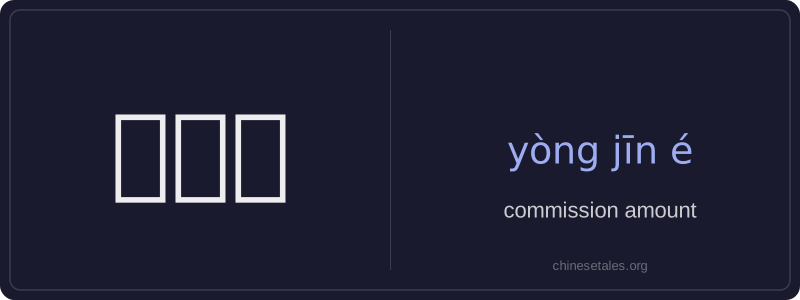
'佣金额' (yòng jīn é) is a compound noun meaning 'commission amount' — the specific sum of money paid as commission, typically in business transactions like real estate, sales, or financial services. The character 佣 (yòng) means 'commission' or 'brokerage fee'; 金 (jīn) means 'money' or 'funds'; and 额 (é) means 'amount', 'quota', or 'fixed sum'. Together, they form a precise, formal term used to denote the monetary value of a commission, not the act or rate itself.
This term appears frequently in contracts, invoices, financial reports, and salary statements — especially where commissions are calculated separately from base pay. It emphasizes quantification: unlike the broader term '佣金' (yòng jīn, 'commission'), '佣金额' always refers to the exact numerical value (e.g., ¥8,500), making it essential in accounting and legal contexts. Learners should note that it’s rarely used in casual speech; instead, native speakers often say '佣金是多少?' rather than '佣金额是多少?' unless discussing formal documentation.
Example Sentences
Related Words
国语
‘Guó yǔ’ literally means 'national language'—
无论谁
‘无论谁’ (wú lùn shéi) is a pronoun meaning
外语
‘外语’ literally means ‘outside language’ —
不对
不对 (bù duì) literally combines 不 (bù), meani
违规
违规 (wéi guī) literally means 'to violate rules
亲笔
‘亲笔’ literally means ‘one’s own hand’—comb
我的
我的 (wǒ de) is a possessive pronoun meaning 'my'
面条
‘面条’ (miàn tiáo) literally means ‘flour str