Word Explanation
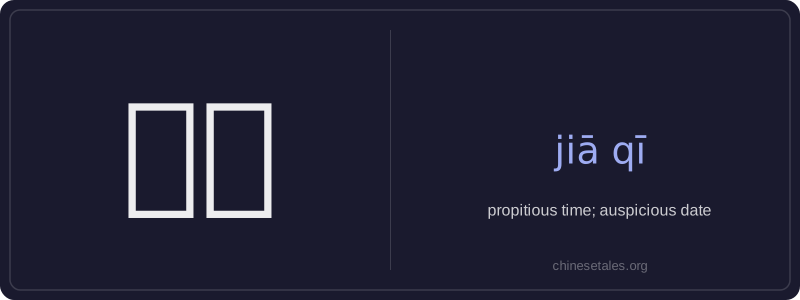
'佳期' literally combines '佳' (jiā), meaning 'excellent, fine, auspicious', and '期' (qī), meaning 'time, date, or period'. Together, they form a classical, literary noun meaning 'propitious time' or 'auspicious date' — especially one chosen for important life events like weddings, moving into a new home, or starting a business. It carries connotations of harmony, good fortune, and celestial alignment, often appearing in poetry, wedding invitations, and traditional almanacs (e.g., the Tong Shu).
The term is formal and elegant, rarely used in casual speech. It evokes cultural values surrounding timing and fate — the idea that success depends not only on effort but also on choosing the right moment. While modern Chinese speakers understand it, its usage is largely confined to ceremonial contexts, written announcements, or literary expressions. It is not interchangeable with neutral terms like '时间' (shíjiān, 'time') or '日期' (rìqī, 'date'), as it inherently implies positive cosmic or social significance.
Example Sentences
Related Words
国语
‘Guó yǔ’ literally means 'national language'—
无论谁
‘无论谁’ (wú lùn shéi) is a pronoun meaning
外语
‘外语’ literally means ‘outside language’ —
不对
不对 (bù duì) literally combines 不 (bù), meani
违规
违规 (wéi guī) literally means 'to violate rules
亲笔
‘亲笔’ literally means ‘one’s own hand’—comb
我的
我的 (wǒ de) is a possessive pronoun meaning 'my'
面条
‘面条’ (miàn tiáo) literally means ‘flour str