Word Explanation
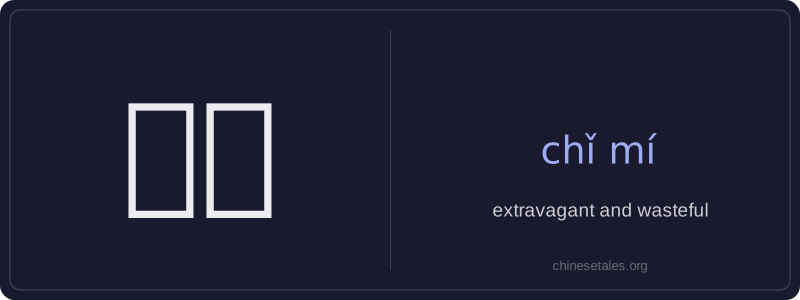
'Chǐ mí' is a compound adjective meaning 'extravagant and wasteful', emphasizing excessive spending or lavish consumption beyond reasonable or necessary limits. The first character, 侈 (chǐ), means 'extravagant' or 'luxurious', often implying moral disapproval of overindulgence; the second, 靡 (mí), means 'wasteful' or 'prodigal', historically linked to squandering resources or declining moral standards. Together, they form a literary, slightly formal term that carries strong negative connotation — not merely 'expensive', but morally or socially irresponsible excess.
This word appears most frequently in written Chinese: essays criticizing consumerism, historical accounts of corrupt officials, or policy discussions about sustainable development. It’s rarely used in casual speech; native speakers tend to prefer simpler terms like 浪费 (làngfèi) or 奢侈 (shēchǐ) in everyday contexts. Its tone is evaluative and judgmental, often invoking Confucian ideals of moderation and frugality.
Example Sentences
Related Words
国语
‘Guó yǔ’ literally means 'national language'—
无论谁
‘无论谁’ (wú lùn shéi) is a pronoun meaning
外语
‘外语’ literally means ‘outside language’ —
不对
不对 (bù duì) literally combines 不 (bù), meani
违规
违规 (wéi guī) literally means 'to violate rules
亲笔
‘亲笔’ literally means ‘one’s own hand’—comb
我的
我的 (wǒ de) is a possessive pronoun meaning 'my'
面条
‘面条’ (miàn tiáo) literally means ‘flour str