Word Explanation
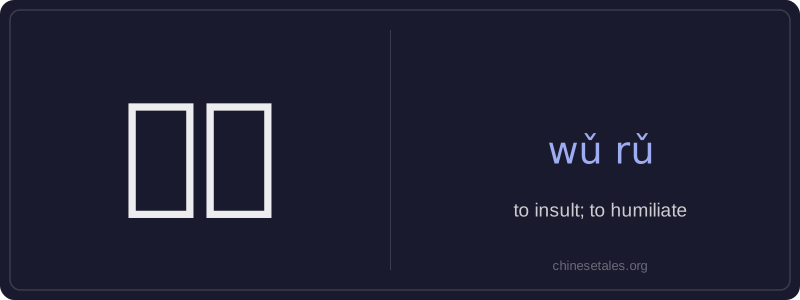
‘侮辱’ is a verb meaning 'to insult' or 'to humiliate' — to deliberately offend someone’s dignity, often through words or actions that belittle or degrade them. The character 侮 (wǔ) conveys contempt or disrespect, while 辱 (rǔ) means 'shame' or 'dishonor'; together, they emphasize causing emotional injury by undermining another person’s self-respect. This word carries strong negative weight and is commonly used in formal, legal, or moral contexts — such as describing verbal abuse, public shaming, or discriminatory remarks.
It typically takes a direct object (e.g., 侮辱他人, 'to insult others') and often appears in written Chinese, news reports, or discussions about rights and ethics. Unlike casual slang like ‘骂’ (to scold), 侮辱 implies intentional harm to someone’s honor and may carry legal consequences in China under defamation laws. It’s rarely used lightly or humorously, and speakers avoid it in polite conversation unless addressing serious misconduct.
Example Sentences
Related Words
国语
‘Guó yǔ’ literally means 'national language'—
无论谁
‘无论谁’ (wú lùn shéi) is a pronoun meaning
外语
‘外语’ literally means ‘outside language’ —
不对
不对 (bù duì) literally combines 不 (bù), meani
违规
违规 (wéi guī) literally means 'to violate rules
亲笔
‘亲笔’ literally means ‘one’s own hand’—comb
我的
我的 (wǒ de) is a possessive pronoun meaning 'my'
面条
‘面条’ (miàn tiáo) literally means ‘flour str