Word Explanation
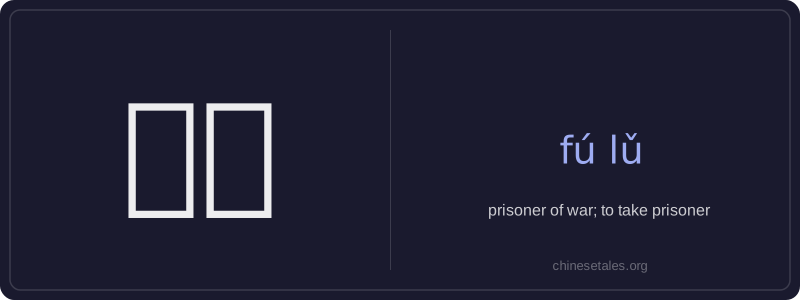
‘俘虏’ (fú lǔ) literally combines two characters: ‘俘’ meaning ‘to capture’ and ‘虏’ meaning ‘captive’ or ‘enemy captive’. Together, they form a compound word that primarily refers to a ‘prisoner of war’—a person captured during armed conflict. As a noun, it emphasizes the status of someone seized by an opposing military force. Historically, it appears frequently in accounts of wars, military histories, and wartime literature.
As a verb, ‘俘虏’ means ‘to take prisoner’ or ‘to capture alive’, often implying deliberate non-lethal seizure in combat. It carries formal, historical, or literary weight and is rarely used in casual speech about everyday situations. While both characters individually can appear in other compounds (e.g., 俘获 fú huò ‘to capture’), ‘俘虏’ as a fixed two-character term is strongly associated with warfare and military contexts—not general detention or arrest.
Example Sentences
Related Words
国语
‘Guó yǔ’ literally means 'national language'—
无论谁
‘无论谁’ (wú lùn shéi) is a pronoun meaning
外语
‘外语’ literally means ‘outside language’ —
不对
不对 (bù duì) literally combines 不 (bù), meani
违规
违规 (wéi guī) literally means 'to violate rules
亲笔
‘亲笔’ literally means ‘one’s own hand’—comb
我的
我的 (wǒ de) is a possessive pronoun meaning 'my'
面条
‘面条’ (miàn tiáo) literally means ‘flour str