Word Explanation
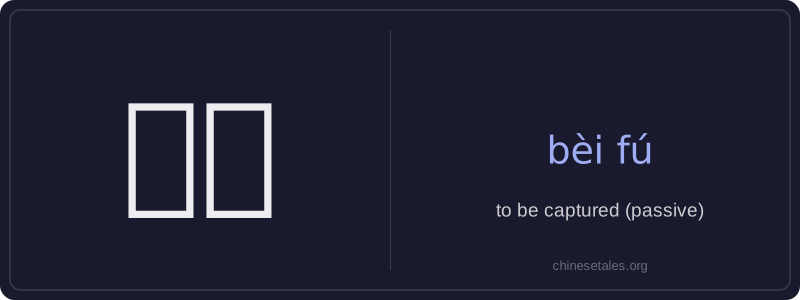
'被俘' is a two-character verb meaning 'to be captured', used exclusively in the passive voice. The first character 被 (bèi) is the standard passive marker in Chinese, indicating that the subject undergoes an action done by someone else. The second character 俘 (fú) means 'to capture' or 'prisoner', derived from military and historical contexts where people or animals are taken by force. Together, 被俘 functions as a fixed passive verb phrase — it cannot be split, and no object follows directly after it.
This term appears most often in historical narratives, war reports, wildlife conservation discussions, or news about endangered species being seized illegally. While it can technically apply to humans or animals, in modern usage it’s frequently used for animals — especially when describing poaching, illegal trafficking, or rescue operations involving protected wildlife. It carries a formal, slightly solemn tone and is rarely used in casual speech.
Example Sentences
Related Words
国语
‘Guó yǔ’ literally means 'national language'—
无论谁
‘无论谁’ (wú lùn shéi) is a pronoun meaning
外语
‘外语’ literally means ‘outside language’ —
不对
不对 (bù duì) literally combines 不 (bù), meani
违规
违规 (wéi guī) literally means 'to violate rules
亲笔
‘亲笔’ literally means ‘one’s own hand’—comb
我的
我的 (wǒ de) is a possessive pronoun meaning 'my'
面条
‘面条’ (miàn tiáo) literally means ‘flour str