Word Explanation
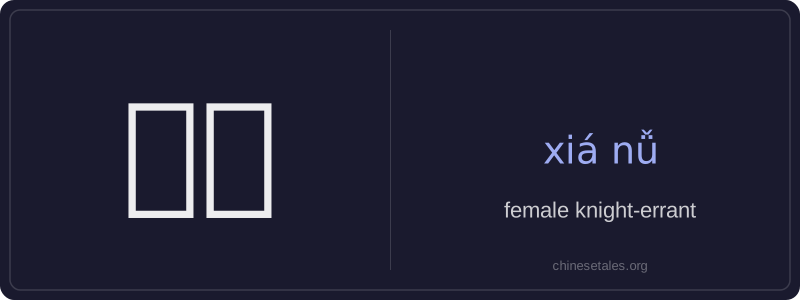
'Xiá nǚ' (female knight-errant) refers to a heroic, chivalrous woman in Chinese literature and folklore—often skilled in martial arts, morally upright, and devoted to justice, protecting the weak and defying corrupt authority. The character 侠 (xiá) conveys 'chivalry', 'righteous courage', or 'knight-errantry', while 女 (nǚ) simply means 'woman' or 'female'. Together, they form a culturally rich compound that evokes classical wuxia novels, opera, and film, where such figures act independently, uphold moral codes, and frequently operate outside official systems.
Unlike generic terms for 'heroine' or 'warrior woman', 侠女 carries strong historical and literary resonance, often implying mastery of swordsmanship, loyalty to personal ethics over law, and a wandering, nomadic lifestyle. It is rarely used in modern daily speech but remains common in artistic, historical, or nostalgic contexts—especially when describing characters from traditional stories like those in The Book and the Sword or contemporary adaptations.
Example Sentences
Related Words
国语
‘Guó yǔ’ literally means 'national language'—
无论谁
‘无论谁’ (wú lùn shéi) is a pronoun meaning
外语
‘外语’ literally means ‘outside language’ —
不对
不对 (bù duì) literally combines 不 (bù), meani
违规
违规 (wéi guī) literally means 'to violate rules
亲笔
‘亲笔’ literally means ‘one’s own hand’—comb
我的
我的 (wǒ de) is a possessive pronoun meaning 'my'
面条
‘面条’ (miàn tiáo) literally means ‘flour str