Word Explanation
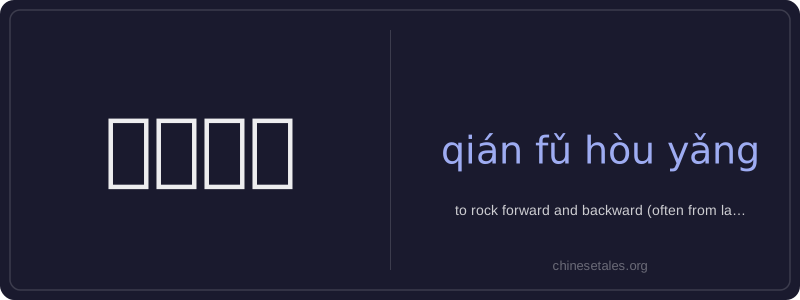
前俯后仰 literally means 'forward bow, backward lean' — combining 前 (front/forward), 俯 (to bend forward), 后 (back/behind), and 仰 (to tilt backward). Together, it vividly depicts the physical motion of rocking uncontrollably in opposite directions, most commonly from intense laughter. It’s an idiomatic four-character expression (chengyu) that emphasizes rhythmic, involuntary body movement driven by strong emotion.
This phrase is almost exclusively used to describe exaggerated, often humorous reactions — especially laughing so hard that one can’t stay upright. While it can technically describe other causes of swaying (e.g., dizziness or imbalance), its overwhelming association is with laughter-induced physical convulsions. It carries a lighthearted, descriptive tone and appears frequently in spoken Chinese and informal writing, such as storytelling or social media captions about funny moments.
Example Sentences
Related Words
国语
‘Guó yǔ’ literally means 'national language'—
无论谁
‘无论谁’ (wú lùn shéi) is a pronoun meaning
外语
‘外语’ literally means ‘outside language’ —
不对
不对 (bù duì) literally combines 不 (bù), meani
违规
违规 (wéi guī) literally means 'to violate rules
亲笔
‘亲笔’ literally means ‘one’s own hand’—comb
我的
我的 (wǒ de) is a possessive pronoun meaning 'my'
面条
‘面条’ (miàn tiáo) literally means ‘flour str