Word Explanation
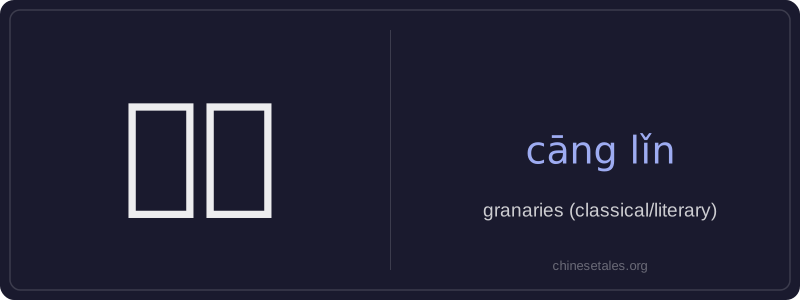
'Cāng lǐn' is a classical Chinese compound noun meaning 'granaries'—large, official storehouses for grain, especially in ancient or literary contexts. The character 仓 (cāng) originally depicted a roofed storage structure and broadly means 'warehouse' or 'storehouse'; 廪 (lǐn) specifically denotes a granary for storing harvested grain, often implying state-managed reserves. Together, 仓廪 carries a formal, historical, or poetic register, evoking images of imperial provisioning, agricultural abundance, or societal stability.
This term appears frequently in classical texts, historical accounts, and formal writing—but rarely in modern spoken Chinese, where simpler terms like 粮仓 (liángcāng) or 仓库 (cāngkù) are preferred. It’s often used in idioms or set phrases such as '仓廪实而知礼节' ('When granaries are full, people understand ritual and propriety'), underscoring its association with governance, prosperity, and moral order.
Example Sentences
Related Words
国语
‘Guó yǔ’ literally means 'national language'—
无论谁
‘无论谁’ (wú lùn shéi) is a pronoun meaning
外语
‘外语’ literally means ‘outside language’ —
不对
不对 (bù duì) literally combines 不 (bù), meani
违规
违规 (wéi guī) literally means 'to violate rules
亲笔
‘亲笔’ literally means ‘one’s own hand’—comb
我的
我的 (wǒ de) is a possessive pronoun meaning 'my'
面条
‘面条’ (miàn tiáo) literally means ‘flour str