Word Explanation
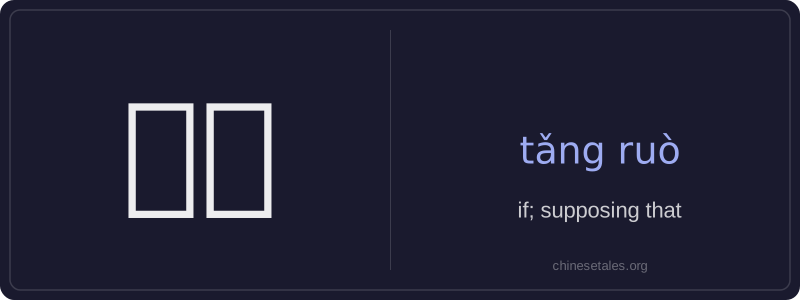
倘若 is a formal conjunction meaning 'if' or 'supposing that', used to introduce a hypothetical or conditional clause. It consists of two characters: 倘 (tǎng), which on its own means 'perhaps' or 'by chance', and 若 (ruò), meaning 'if' or 'as if'. Together, they form a literary and slightly elevated alternative to the more common 如果 (rúguǒ) or 要是 (yàoshi). While grammatically interchangeable with those in many contexts, 倘若 appears more frequently in written Chinese—such as essays, formal speeches, or literature—than in casual spoken conversation.
It typically precedes the condition (the 'if' clause), and the main clause follows, often without an explicit 'then'. The tone is neutral but refined; overuse in everyday speech may sound stiff or overly scholarly. Learners should note that it does not require any special particles like 的 or 了 after it—the structure is simply 倘若 + [condition], + [result].
Example Sentences
Related Words
国语
‘Guó yǔ’ literally means 'national language'—
无论谁
‘无论谁’ (wú lùn shéi) is a pronoun meaning
外语
‘外语’ literally means ‘outside language’ —
不对
不对 (bù duì) literally combines 不 (bù), meani
违规
违规 (wéi guī) literally means 'to violate rules
亲笔
‘亲笔’ literally means ‘one’s own hand’—comb
我的
我的 (wǒ de) is a possessive pronoun meaning 'my'
面条
‘面条’ (miàn tiáo) literally means ‘flour str