Word Explanation
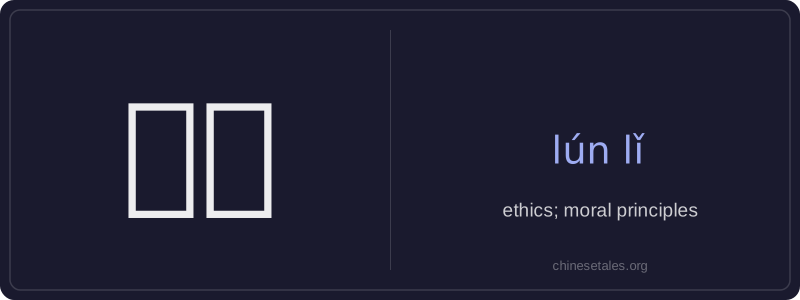
伦理 (lún lǐ) is a formal noun meaning 'ethics' or 'moral principles' — the system of values and rules that guide how people ought to behave, especially in relation to others. The first character 伦 (lún) originally referred to human relationships and social order (e.g., the 'five cardinal relationships' in Confucian thought), while 理 (lǐ) means 'principle', 'reason', or 'pattern'. Together, they convey the idea of reasoned, socially grounded moral norms — not just personal feelings, but shared standards for right conduct.
This term appears frequently in academic, philosophical, legal, and professional contexts — such as medical ethics (医学伦理), business ethics (商业伦理), or animal ethics (动物伦理). It’s more abstract and institutional than everyday words like 道德 (dào dé, 'morality') and carries weight in discussions about duty, justice, and societal responsibility. While it can be used broadly, it’s rarely found in casual speech and is typically paired with modifiers indicating domain or scope.
Example Sentences
Related Words
国语
‘Guó yǔ’ literally means 'national language'—
无论谁
‘无论谁’ (wú lùn shéi) is a pronoun meaning
外语
‘外语’ literally means ‘outside language’ —
不对
不对 (bù duì) literally combines 不 (bù), meani
违规
违规 (wéi guī) literally means 'to violate rules
亲笔
‘亲笔’ literally means ‘one’s own hand’—comb
我的
我的 (wǒ de) is a possessive pronoun meaning 'my'
面条
‘面条’ (miàn tiáo) literally means ‘flour str