Word Explanation
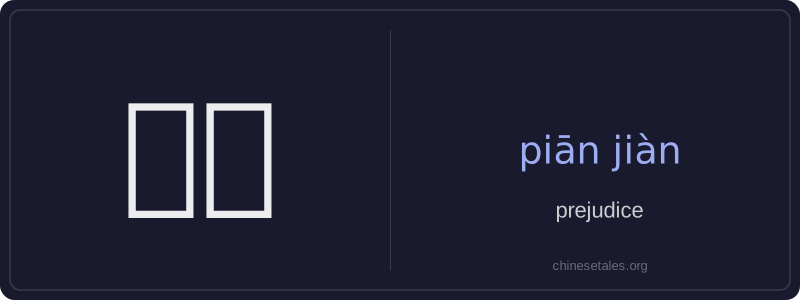
偏见 (piān jiàn) means 'prejudice' — an unfair and often negative opinion formed without enough knowledge or experience. The character 偏 (piān) means 'biased', 'one-sided', or 'off-center', suggesting deviation from fairness or balance. The character 见 (jiàn) means 'view', 'sight', or 'opinion', referring to how one perceives or judges something. Together, they literally convey 'a slanted view' — highlighting that the judgment is distorted by personal assumptions rather than objective facts.
This word is commonly used in discussions about social issues, stereotypes, discrimination, or personal biases — especially when describing unjust attitudes toward people based on race, gender, appearance, background, or other superficial traits. It carries a clear negative connotation and implies irrationality or lack of openness. While it can appear in formal writing and speeches, it’s also common in everyday conversation when reflecting critically on one’s own or others’ thinking patterns.
Example Sentences
Related Words
国语
‘Guó yǔ’ literally means 'national language'—
无论谁
‘无论谁’ (wú lùn shéi) is a pronoun meaning
外语
‘外语’ literally means ‘outside language’ —
不对
不对 (bù duì) literally combines 不 (bù), meani
违规
违规 (wéi guī) literally means 'to violate rules
亲笔
‘亲笔’ literally means ‘one’s own hand’—comb
我的
我的 (wǒ de) is a possessive pronoun meaning 'my'
面条
‘面条’ (miàn tiáo) literally means ‘flour str