Word Explanation
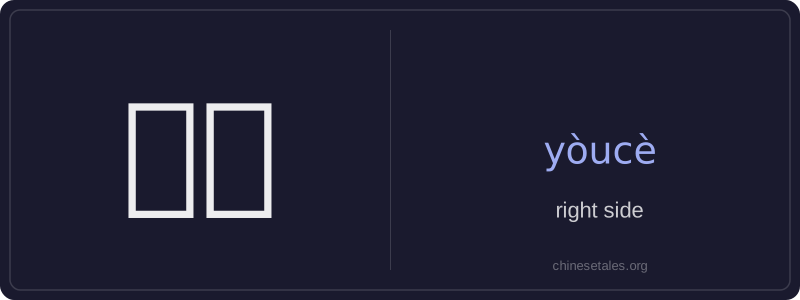
右侧 literally means 'right side' — 右 (yòu) means 'right' (as in direction or position), and 侧 (cè) means 'side' or 'flank'. Together, they form a compound noun specifying the right-hand side of something, whether it’s a person’s body, an object, a vehicle, a room, or a page. It is neutral in register and commonly used in both spoken and written Chinese.
This term is frequently used for giving or following directions (e.g., 'turn to the right side'), describing spatial relationships ('the book is on the right side of the desk'), or indicating anatomical location ('pain in the right side'). Unlike the standalone word 右, which can also function as an adjective or noun meaning 'right' (e.g., right hand, right wing), 右侧 always functions as a noun referring specifically to the physical side — never as an adjective or verb. It is often paired with 左侧 (zuǒcè, 'left side') for contrast.
Example Sentences
Related Words
国语
‘Guó yǔ’ literally means 'national language'—
无论谁
‘无论谁’ (wú lùn shéi) is a pronoun meaning
外语
‘外语’ literally means ‘outside language’ —
不对
不对 (bù duì) literally combines 不 (bù), meani
违规
违规 (wéi guī) literally means 'to violate rules
亲笔
‘亲笔’ literally means ‘one’s own hand’—comb
我的
我的 (wǒ de) is a possessive pronoun meaning 'my'
面条
‘面条’ (miàn tiáo) literally means ‘flour str