Word Explanation
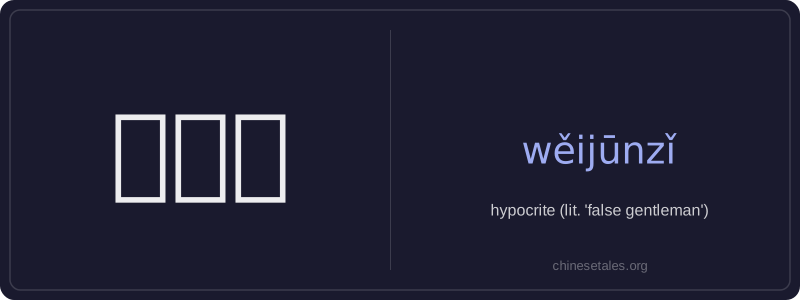
'Wěijūnzǐ' literally means 'false gentleman' — a compound of 伪 (wěi, 'false' or 'fake'), 君 (jūn, an archaic term for 'lord' or 'noble person'), and 子 (zǐ, an honorific suffix meaning 'master' or 'scholar'). Historically, it referred to someone who outwardly pretends to uphold Confucian virtues like integrity, benevolence, and propriety while secretly acting selfishly, deceptively, or immorally. The term carries strong moral condemnation and is often used in criticism, satire, or ethical discussions.
Unlike neutral terms for 'hypocrite', 伪君子 has sharp rhetorical force and implies deliberate, performative virtue — not just inconsistency, but active deception rooted in social expectations of moral excellence. It appears frequently in literature, political commentary, and everyday speech when accusing someone of sanctimonious behavior, especially when their public persona starkly contradicts private actions.
Example Sentences
Related Words
国语
‘Guó yǔ’ literally means 'national language'—
无论谁
‘无论谁’ (wú lùn shéi) is a pronoun meaning
外语
‘外语’ literally means ‘outside language’ —
不对
不对 (bù duì) literally combines 不 (bù), meani
违规
违规 (wéi guī) literally means 'to violate rules
亲笔
‘亲笔’ literally means ‘one’s own hand’—comb
我的
我的 (wǒ de) is a possessive pronoun meaning 'my'
面条
‘面条’ (miàn tiáo) literally means ‘flour str