Word Explanation
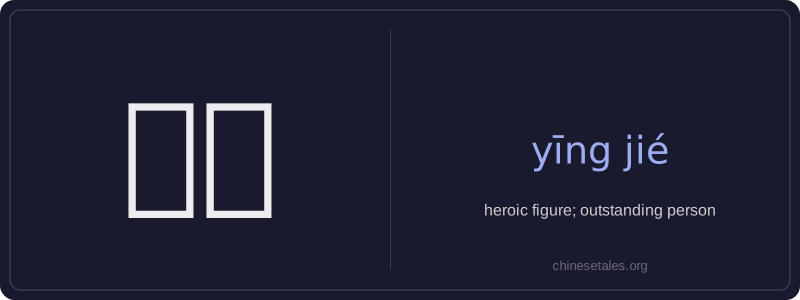
‘英杰’ (yīng jié) is a formal, literary noun meaning ‘heroic figure’ or ‘outstanding person’—someone admired for exceptional talent, virtue, or achievement. The first character 英 (yīng) conveys excellence, heroism, or brilliance (as in 英雄 yīngxióng, ‘hero’), while 杰 (jié) means ‘outstanding,’ ‘eminent,’ or ‘distinguished’ (as in 杰出 jiéchū, ‘outstanding’). Together, they form a compound emphasizing extraordinary moral stature and ability, often used in historical, political, or inspirational contexts.
This term carries strong positive connotations and is commonly found in formal writing, speeches, classical allusions, or media coverage of national figures. It’s rarely used in casual daily speech—it sounds elevated and respectful, closer to ‘paragon’ or ‘illustrious luminary’ than simply ‘talented person.’ It may refer to historical sages, revolutionary leaders, or contemporary pioneers who embody integrity, courage, and contribution to society.
Example Sentences
Related Words
国语
‘Guó yǔ’ literally means 'national language'—
无论谁
‘无论谁’ (wú lùn shéi) is a pronoun meaning
外语
‘外语’ literally means ‘outside language’ —
不对
不对 (bù duì) literally combines 不 (bù), meani
违规
违规 (wéi guī) literally means 'to violate rules
亲笔
‘亲笔’ literally means ‘one’s own hand’—comb
我的
我的 (wǒ de) is a possessive pronoun meaning 'my'
面条
‘面条’ (miàn tiáo) literally means ‘flour str