Word Explanation
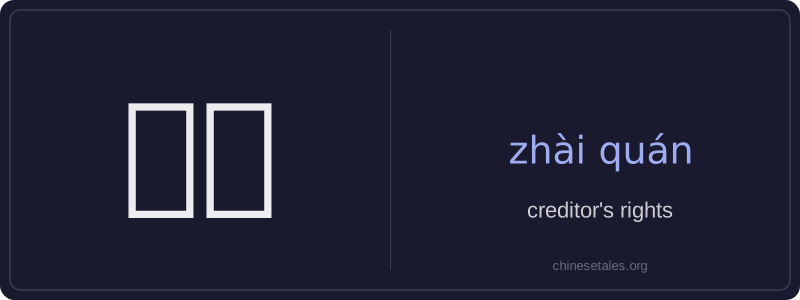
'债权' (zhài quán) literally combines 债 (zhài), meaning 'debt' or 'loan', and 权 (quán), meaning 'right' or 'authority'. Together, it refers to the legal rights a creditor holds against a debtor — such as the right to demand repayment, claim interest, or enforce security. It is a formal, legal term used primarily in finance, law, and business contexts, not in everyday conversation.
This term appears frequently in contracts, court rulings, bankruptcy proceedings, and financial reports. Unlike colloquial expressions like '欠钱' (owing money), 债权 emphasizes the creditor’s enforceable entitlement under Chinese civil law. It contrasts with '债务' (zhàiwù), which denotes the debtor’s obligation. Understanding this distinction is essential for reading legal documents or discussing credit arrangements in China.
Example Sentences
Related Words
国语
‘Guó yǔ’ literally means 'national language'—
无论谁
‘无论谁’ (wú lùn shéi) is a pronoun meaning
外语
‘外语’ literally means ‘outside language’ —
不对
不对 (bù duì) literally combines 不 (bù), meani
违规
违规 (wéi guī) literally means 'to violate rules
亲笔
‘亲笔’ literally means ‘one’s own hand’—comb
我的
我的 (wǒ de) is a possessive pronoun meaning 'my'
面条
‘面条’ (miàn tiáo) literally means ‘flour str