Word Explanation
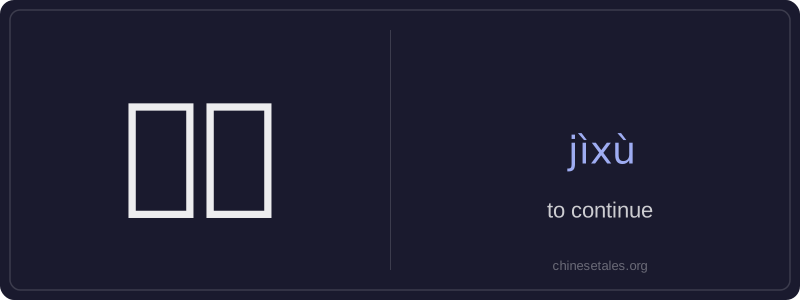
继续 (jìxù) is a verb meaning 'to continue' — to carry on with an action, process, or state that was already in progress. The character 继 (jì) means 'to follow after' or 'to succeed', and 续 (xù) means 'to carry on' or 'to extend'. Together, they form a compound verb emphasizing uninterrupted continuation. It is commonly used in both spoken and written Chinese, especially when resuming an activity after a pause, maintaining a trend, or extending a situation.
This word often follows subjects directly and can be modified by adverbs like 还 (hái), 再 (zài), or 不再 (bù zài) to express continuation, repetition, or cessation. It frequently appears in instructions, narratives, and daily conversations — for example, when asking someone to keep speaking, working, or studying. Unlike some English 'continue' constructions, 继续 does not require a preposition before the following verb; it directly precedes the verb it modifies (e.g., 继续学习, not 继续在学习).
Example Sentences
Related Words
国语
‘Guó yǔ’ literally means 'national language'—
面条
‘面条’ (miàn tiáo) literally means ‘flour str
无论谁
‘无论谁’ (wú lùn shéi) is a pronoun meaning
背后
背后 literally means 'back + behind' and functions
外语
‘外语’ literally means ‘outside language’ —
认同
‘认同’ (tóng rèn) is a verb meaning ‘to ident
中学
'Zhōngxué' literally combines 'zhōng' (middle)
认为
‘认为’ (rèn wéi) is a transitive verb meaning