Word Explanation
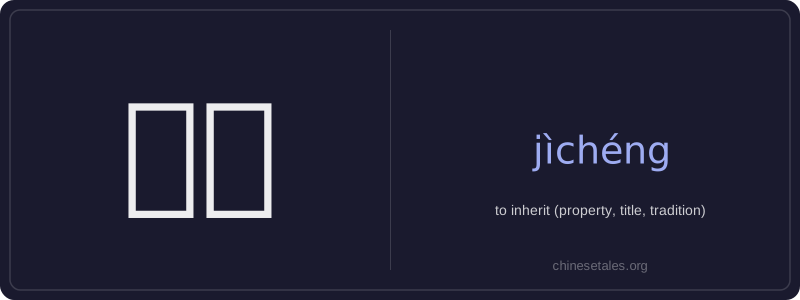
继承 (jìchéng) is a verb meaning 'to inherit' — most commonly referring to receiving property, titles, rights, or responsibilities from someone who has passed away or stepped aside. The first character 继 (jì) means 'to continue' or 'to follow after', while 承 (chéng) means 'to receive', 'to accept', or 'to undertake'. Together, they convey the idea of formally taking on what was held or practiced by a predecessor — whether tangible assets like land or money, or intangible legacies like family traditions, cultural practices, or professional expertise.
This word is formal and often appears in legal, familial, historical, or institutional contexts. It implies continuity, legitimacy, and responsibility — not just passive receipt but active continuation. While it can refer to biological inheritance (e.g., inheriting wealth), it’s also widely used metaphorically: inheriting values, a leadership role, or even a philosophical school of thought. It is rarely used for everyday objects or casual situations — for those, words like 接收 (jiēshōu, 'to receive') or 得到 (dédào, 'to get') are more appropriate.
Example Sentences
Related Words
国语
‘Guó yǔ’ literally means 'national language'—
面条
‘面条’ (miàn tiáo) literally means ‘flour str
无论谁
‘无论谁’ (wú lùn shéi) is a pronoun meaning
背后
背后 literally means 'back + behind' and functions
外语
‘外语’ literally means ‘outside language’ —
认同
‘认同’ (tóng rèn) is a verb meaning ‘to ident
中学
'Zhōngxué' literally combines 'zhōng' (middle)
认为
‘认为’ (rèn wéi) is a transitive verb meaning