Word Explanation
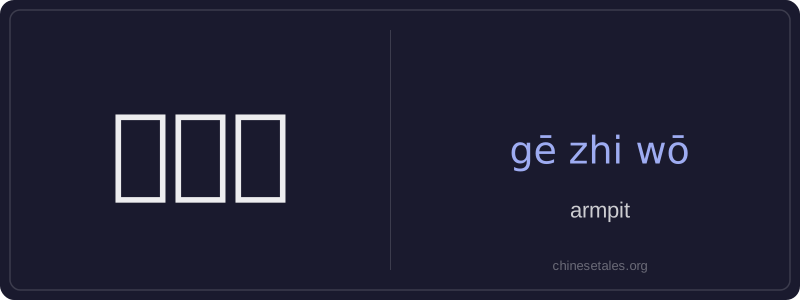
‘胳肢窝’ literally breaks down as ‘gē’ (a variant prefix for body parts), ‘zhī’ (limb), and ‘wō’ (a hollow or cavity) — together evoking the natural hollow under the arm where the arm meets the torso. It is the standard, colloquial term for 'armpit' in everyday Mandarin, used across ages and registers. Unlike the more clinical term ‘腋下’ (yèxià), ‘胳肢窝’ carries a warm, informal, slightly playful tone — common in descriptions of physical sensation, hygiene, or light humor.
This word appears frequently in health-related contexts (e.g., checking for swollen lymph nodes), personal care routines (e.g., applying deodorant), and even idiomatic expressions like ‘胳肢窝发痒’ (a metaphor for restlessness or impatience). Though it contains ‘肢’ (limb), it refers exclusively to the human armpit — never used for animals or machinery. Its three-syllable rhythm and soft ‘wō’ ending make it easy to remember and distinctly conversational.
Example Sentences
Related Words
国语
‘Guó yǔ’ literally means 'national language'—
面条
‘面条’ (miàn tiáo) literally means ‘flour str
背后
背后 literally means 'back + behind' and functions
无论谁
‘无论谁’ (wú lùn shéi) is a pronoun meaning
中学
'Zhōngxué' literally combines 'zhōng' (middle)
外语
‘外语’ literally means ‘outside language’ —
认同
‘认同’ (tóng rèn) is a verb meaning ‘to ident
不对
不对 (bù duì) literally combines 不 (bù), meani