Word Explanation
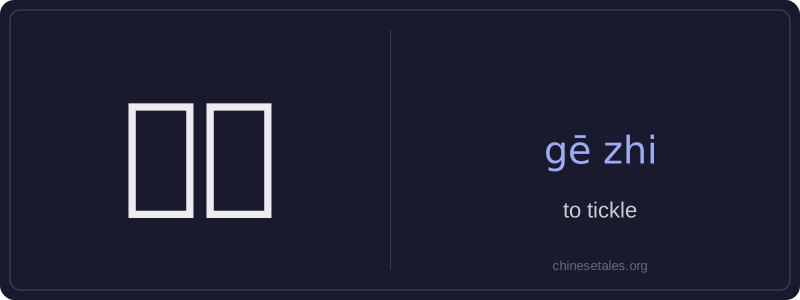
‘Gē zhi’ is a colloquial verb meaning ‘to tickle’—specifically, to lightly touch or stroke someone’s sensitive body areas (like the ribs, armpits, or neck) to provoke laughter or squirming. Though written with two characters, 胳 and 肢, neither stands alone with this meaning: ‘gē’ here is a phonetic component borrowed from ‘gē bo’ (arm), and ‘zhī’ means ‘limb’—together they form an onomatopoeic, reduplicated-sounding compound that evokes the light, repetitive motion of tickling.
This word is informal and commonly used in playful, familial, or child-oriented contexts—between parents and young children, siblings, or close friends. It rarely appears in formal writing or serious speech. Note that it’s almost always used as a transitive verb requiring an object (e.g., ‘gē zhi tā’ — ‘tickle him/her’), and the action implies gentle, non-harmful physical play.
Example Sentences
Related Words
国语
‘Guó yǔ’ literally means 'national language'—
面条
‘面条’ (miàn tiáo) literally means ‘flour str
背后
背后 literally means 'back + behind' and functions
无论谁
‘无论谁’ (wú lùn shéi) is a pronoun meaning
中学
'Zhōngxué' literally combines 'zhōng' (middle)
外语
‘外语’ literally means ‘outside language’ —
认同
‘认同’ (tóng rèn) is a verb meaning ‘to ident
不对
不对 (bù duì) literally combines 不 (bù), meani