Word Explanation
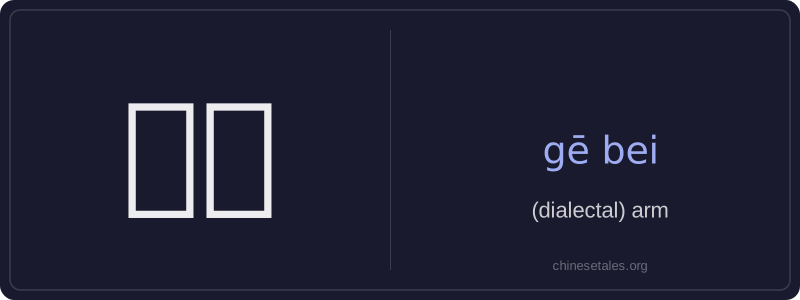
‘胳臂’ (gē bei) is a colloquial, dialectal term for ‘arm’—commonly used in Northern Mandarin speech, especially in everyday conversation. Though the character 臂 is pronounced bì in isolation and in formal compounds like 手臂 (shǒubì), in this two-syllable word it is pronounced bei, reflecting a phonological simplification typical of spoken language. The first character 胳 carries no independent meaning here but forms a fixed disyllabic unit with 臂; together, they denote the entire upper limb from shoulder to wrist.
This term is neutral in register but feels more informal and regional than the standard word 手臂 or the even more common 手 (hand/arm in context). It appears frequently in descriptions of physical action, injury, posture, or body awareness—especially in spoken narratives, medical instructions among non-specialists, or regional storytelling. Unlike 手臂, which emphasizes anatomical precision, 胳臂 conveys a more holistic, embodied sense of the arm as a functional part of daily movement.
Example Sentences
Related Words
国语
‘Guó yǔ’ literally means 'national language'—
面条
‘面条’ (miàn tiáo) literally means ‘flour str
背后
背后 literally means 'back + behind' and functions
无论谁
‘无论谁’ (wú lùn shéi) is a pronoun meaning
中学
'Zhōngxué' literally combines 'zhōng' (middle)
外语
‘外语’ literally means ‘outside language’ —
认同
‘认同’ (tóng rèn) is a verb meaning ‘to ident
不对
不对 (bù duì) literally combines 不 (bù), meani