Word Explanation
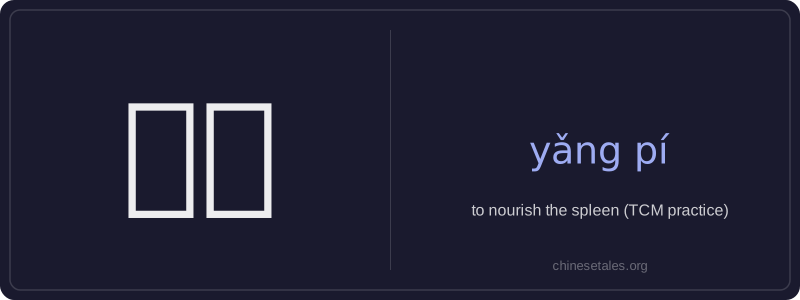
‘养脾’ (yǎng pí) is a Traditional Chinese Medicine (TCM) term meaning 'to nourish the spleen' — not the anatomical organ alone, but the broader TCM functional system governing digestion, energy transformation, and blood regulation. The character 养 (yǎng) means 'to nourish, cultivate, or maintain', while 脾 (pí) refers specifically to the spleen in both Western and TCM contexts, though its TCM functions extend far beyond immunity and blood filtration to include appetite, muscle health, and mental focus.
This phrase appears in health advice, dietary guidelines, herbal prescriptions, and qigong or acupuncture discussions. It reflects a preventive, holistic approach: rather than treating disease, one strengthens the spleen’s qi (vital energy) through warm, easily digested foods (like congee or ginger), regular meals, and emotional calm — since overthinking and worry are said to damage the spleen in TCM theory.
Example Sentences
Related Words
国语
‘Guó yǔ’ literally means 'national language'—
面条
‘面条’ (miàn tiáo) literally means ‘flour str
无论谁
‘无论谁’ (wú lùn shéi) is a pronoun meaning
背后
背后 literally means 'back + behind' and functions
外语
‘外语’ literally means ‘outside language’ —
认为
‘认为’ (rèn wéi) is a transitive verb meaning
认同
‘认同’ (tóng rèn) is a verb meaning ‘to ident
中学
'Zhōngxué' literally combines 'zhōng' (middle)